Introduction
When I think back on classic television history, I picture American living rooms where Ward Cleaver appeared. He stood as the gentle yet firm, idealized father figure—the trusted American TV dad to Beaver. This iconic and unforgettable presence captivated audiences across America for six memorable years. Behind that calm, reassuring image was Hugh Beaumont, a fascinating man with a rare double life. He was both a respected Hollywood actor and an ordained Methodist minister, balancing two demanding careers.
While building television fame through memorable TV shows and extensive movies, he quietly shaped his Hollywood career. Hugh Beaumont’s movies and TV shows helped establish him as a true cultural icon with an enduring legacy. At the same time, his private family life was deeply affected by a tragic accident. The Hugh Beaumont son accident was a personal tragedy that forever altered his world and family life.
From my behind-the-scenes deep dive, this extraordinary journey continues to reveal intimate and fascinating details. These include how he earned a modest net worth that remained surprisingly low throughout his life. His story invites readers to uncover, examine, and understand the complete story and lasting cultural impact.
Hugh Beaumont Net Worth, Wife, Career, Movies, TV Shows & Life
Looking at Hugh Beaumont’s biography and his journey through Hollywood, it’s clear he was more than a television icon. Born in Kansas, Eugene Hugh Beaumont managed to balance two demanding careers while building his wealth through memorable movies and TV shows. His personal challenges and professional triumphs tell a story of perseverance, faith, and a lasting family legacy inspiring audiences today. As a multifaceted entertainer, he carved a unique niche in entertainment history, leaving behind a legacy shaped by his spiritual calling.
His unwavering family values and notable entertainment achievements reflect a life devoted to both work and family. Examining his life demonstrates how a committed man could maintain a thriving career while nurturing a meaningful family life. From my own research, his remarkable journey continues to extend its impact, inviting readers to appreciate his full life and work.
Hugh Beaumont Net Worth at Death: Full Breakdown
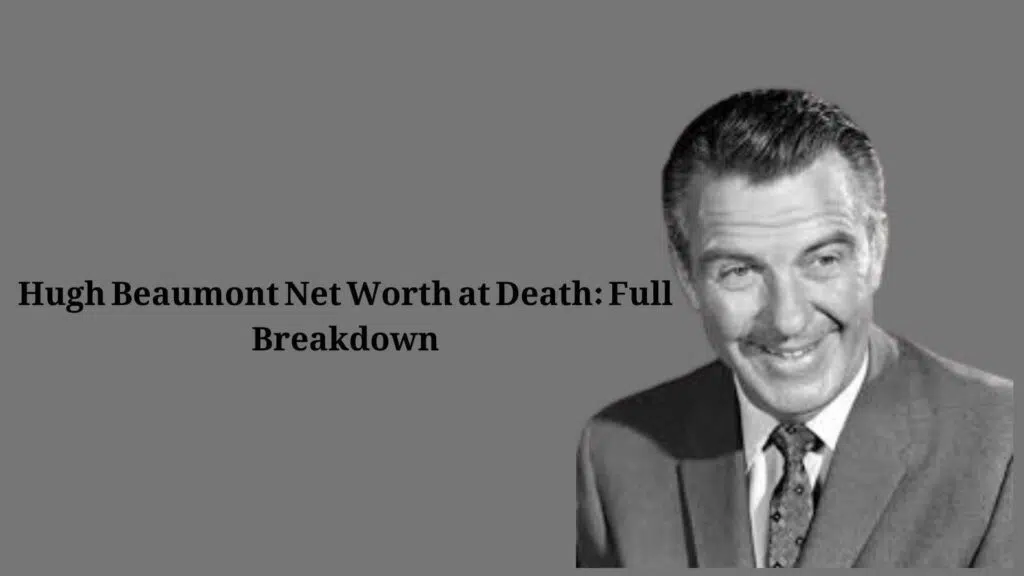
When Hugh Beaumont passed away in 1982, his net worth was estimated at about $1.5 million, which equals roughly $4.5 million today. Though modest compared to today’s celebrity fortunes, it was a substantial amount for a television actor of his era, reflecting both his success and lasting impact in Hollywood.
Multiple factors shaped Hugh Beaumont’s financial situation:
The Business of Television in the 1950s and 1960s
During the golden age of television, the entertainment industry worked very differently from how it does today. Actors like Hugh Beaumont earned fixed salaries and didn’t benefit from the lucrative residual payments that modern performers often enjoy. Hit shows such as Leave It to Beaver brought in millions from TV reruns, but these television earnings were rarely included in Hugh Beaumont’s total earnings, reflecting how the financial structures of the time operated.
Even as reruns generated massive revenue, many talented television actors relied solely on their contracted salaries, highlighting why understanding his career and wealth is key to the full story of the Hugh Beaumont son accident.
| Income Source | Estimated Annual Earnings | Career Span |
| Television Acting | $25,000 – $35,000 | 1950s – 1970s |
| Film Roles | $5,000 – $15,000 per film | 1940s – 1960s |
| Ministry Work | $3,000 – $8,000 | Ongoing |
| Writing Projects | $2,000 – $5,000 | Sporadic |
Key Factors That Shaped His Wealth
Hugh Beaumont’s income came mostly from television acting, but his dual career as a minister meant he often prioritized his spiritual calling over higher-paying Hollywood opportunities, which directly impacted his fortune accumulation. Popular shows like Leave It to Beaver earned millions from syndication rights, yet residual payment structures and modern residual payments predated his contracts, so they didn’t benefit his Hugh Beaumont wealth as they do for today’s actors.
His careful stewardship, financial prudence, and money management—choosing stable investments over risky ventures and maintaining modest living expenses—reflected a disciplined approach to his Hugh Beaumont fortune, characterized by responsibility and thoughtful long-term planning.
Quick Facts You Should Know About Hugh Beaumont
Here’s key information about the actor who brought Ward Cleaver to life:
Inside His Personal Life:
- Eugene Hugh Beaumont, born February 16, 1909, in Lawrence, Kansas, dedicated his life to both faith and entertainment.
- He is best known for his iconic role as Ward Cleaver in Leave It to Beaver (1957–1963), becoming a beloved television icon.
- His primary professions included Actor, Ordained Methodist Minister, and Writer, highlighting a unique career and devotion beyond Hollywood.
- Across 73 years, he worked, starred, and portrayed roles that featured his talent while contributing to family and community.
- His life details show he served, played, and was recognized for his personal integrity and professional commitment until his death on May 14, 1982.
Inside His Family Life:
- Spouse: Kathryn Adams Doty, who married Hugh Beaumont in December 1941, sharing a life full of love and commitment.
- Marriage Duration: They were together for 41 years, staying devoted until Hugh Beaumont’s passing.
- Children: The couple had three children – Hunter, Kristy, and Mark, who were a central part of his family life.
Notable Career Highlights:
- Acting Career: Hugh Beaumont’s career spanned the 1940s to the 1970s, highlighting decades of talent, versatility, and dedication.
- Notable Achievement: He successfully balanced dual careers as a Hollywood actor and an Ordained Methodist minister, a rare combination.
- Education: He studied at the University of Chattanooga and USC, gaining the knowledge and skills that shaped his multifaceted career.
- Legacy: Hugh Beaumont is remembered as an iconic American television father figure, leaving a lasting mark on pop culture and television history.
Hugh Beaumont’s Physical Stats:
- Height: Hugh Beaumont stood 6’2″ (188 cm), giving him a strong and commanding presence on screen.
- Build: He had a tall, distinguished appearance, exuding poise and classic elegance.
- Screen Presence: Known for his authoritative yet gentle demeanor, he perfectly embodied the ideal television father figure.
This actor’s biography highlights a man who stood out in Hollywood, staying devoted to his family values and spiritual beliefs throughout his life and career.
Hugh Beaumont: The Family Tragedy
In 1963, a deeply heartbreaking chapter in Hugh Beaumont’s life occurred when his eldest son, Hunter, was seriously injured in a car accident. This tragic family event left a lasting emotional impact on the Beaumont household, showing that behind the beloved television father from Leave It to Beaver was a man who faced real-life challenges, personal loss, and profound grief.
The Devastating Incident
In his twenties, Hunter Beaumont, the son of Hugh Beaumont, was involved in a life-altering car accident that turned what should have been a celebratory time for the family into heartbreak. The tragic incident caused severe injuries and left him permanently disabled, creating a lasting family tragedy and deep personal loss.
At the same time, Hugh Beaumont was stepping away from his iconic television role to focus on his ministry, making the lasting impact of this moment even more emotional and profoundly human.
Lasting Effects on Hugh Beaumont and His Family:
- Hunter required ongoing medical treatment and extended rehabilitation as part of his recovery journey
- The family faced intense emotional stress along with growing financial challenges.
- During this deeply difficult period, the Hugh Beaumont family stood united, supporting one another through the pain.
- Mounting medical expenses added significant financial strain to an already overwhelming situation.
Hugh’s Personal Response to the Tragedy
Hugh Beaumont faced the heartbreaking tragedy of his son’s injury with extraordinary personal strength, leaning on his faith as an ordained minister to support and guide his family through such a difficult time. This personal loss profoundly influenced his career choices, leading him to prioritize family over certain projects and pick roles that kept him close to his loved ones.
His commitment to family, spiritual convictions, and personal philosophy helped him navigate the crisis, strengthening relationships and providing guidance with care and compassion. The experience reflected his resilience, demonstrated emotional maturity, and showed how he balanced financial considerations and professional selectivity while staying devoted to what truly mattered most.
Family Life: His Wife
Behind the famous Hugh Beaumont and his successful dual career stood Kathryn Adams Doty, his devoted wife and unwavering anchor. Their Hugh Beaumont marriage lasted 41 years, during which she was his trusted confidante and steady support, shaping the family dynamics he often portrayed on screen.
More than just a spouse, she was the steady force and real-life foundation behind his thriving dual career, fostering a loving family environment that carried through both joys and the challenges of the Hugh Beaumont son’s accident. Her presence reflected partnership, dedication, and resilience, showing how deeply family can influence both life and legacy.
First Encounters and Romance
In the early 1940s, a young Hugh met Kathryn, an aspiring actress and writer, as they both chased their dreams in Hollywood’s competitive world. Their Hugh and Kathryn relationship blossomed during World War II, a time of uncertainty that made their love even more meaningful.
As they navigated their early romance, Hugh focused on establishing his career while Kathryn pursued her ambitions, and together they met, made, and were part of a partnership that laid the foundation for decades of devotion, strong family bonds, and resilience—even through the hardships later marked by the Hugh Beaumont son accident.
Key moments in their courtship included:
- Enjoyed exploring literature and theater together, sharing a love for the arts
- Connected deeply through shared spiritual values and faith
- Encouraged and supported each other’s career dreams and ambitions
- Valued and honored family traditions, creating a strong sense of heritage
Marriage and Life Together: 1941–1982
In December 1941, they tied the knot just weeks after Pearl Harbor, leaning on each other’s love and support to face the uncertain times ahead.
| Marriage Milestone | Year | Significance |
| Wedding | December 1941 | The start of their lifelong partnership |
| First Child (Hunter) | 1943 | Welcomed the beginning of their family |
| Hugh’s TV Breakthrough | 1957 | Achieved fame with “Leave It to Beaver.” |
| Son’s Accident | 1963 | Faced a major family crisis |
| Hugh’s Death | 1982 | Marked the end of their 41-year marriage |
Kathryn’s Impact on Hugh’s Success
Behind Hugh Beaumont’s success, Kathryn was the steady force shaping both his Hollywood and ministry life. She managed the Beaumont family with remarkable grace, balancing the responsibilities of his dual career in acting and spiritual work. Her unwavering personal support helped Hugh navigate Hollywood’s pressures while keeping a loving, stable family life.
Fully aware of the unique challenges of his professional demands, Kathryn’s guidance and presence allowed him to focus on his craft, making her influence on his achievements both undeniable and deeply human.
How She Supported Hugh’s Success:
- Managed the home with care while Hugh was often away working
- Supported his ministry by actively participating in church and community life
- Protected their children from the glare and pressures of Hollywood
- Provided steady emotional support through both career successes and challenges
Notable Achievements
Personal Accomplishments tied to the story of the Hugh Beaumont son accident are often overlooked, but when you look closer—as someone who has studied classic Hollywood families—you see a man who stayed grounded when life got hard. Hugh Beaumont worked hard to protect his family life, and Jerry Mathers, his Leave It to Beaver co-star, later spoke with real respect about that side of him. He took his role as a father seriously, leaning on a strong marriage and a natural intellectual curiosity that pushed him toward constant personal growth.
Alongside Kathryn, his supportive spouse and an independent woman, he built a supportive partnership that helped shape him into a better man and a better father. A family friend once shared that Hugh wasn’t just a familiar face on TV—he was a private, caring man, fully present at home and committed to being there for the people who mattered most.
Standing Strong Through Shared Loss
The Hugh Beaumont son’s accident in 1963 was a heart-wrenching moment for Hugh Beaumont and Kathryn Beaumont, but their marriage and dedication to family kept them grounded. Facing shared hardship and a truly difficult period, they coordinated care for Hunter and their children, always supporting each other’s emotional needs while maintaining family unity.
Their unwavering partnership strengthened their relationship, deepened their bond, and created a lasting appreciation for even the smallest moments. Through personal strength, caregiving, and emotional support, they showed that even in the darkest tragedy, resilience and commitment can turn pain into enduring family stability.
Read More: Adrianne Baum: The Untold Story of Her Rise & Fortune
Hugh Beaumont’s Best Movies and TV Roles
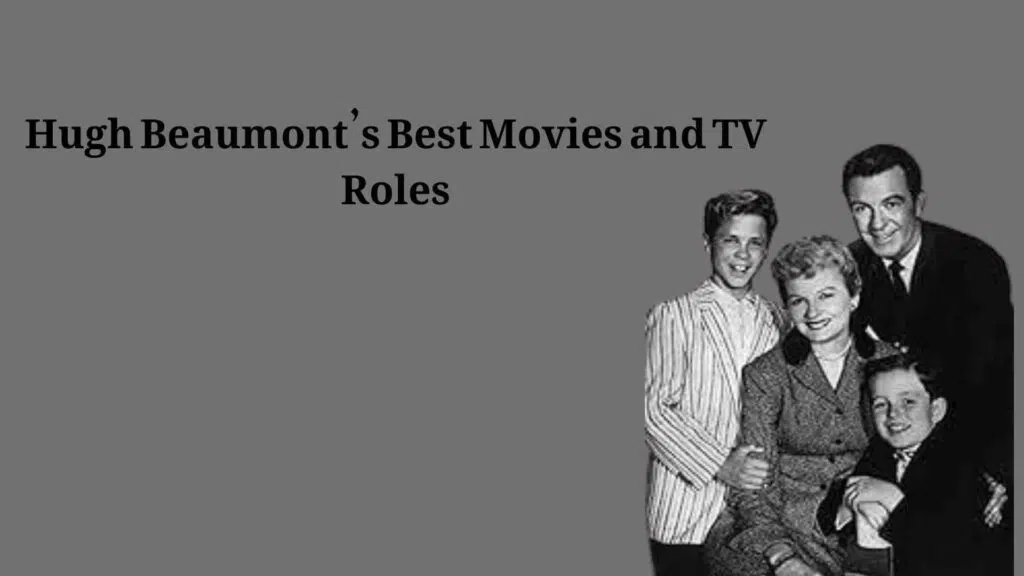
Spanning three decades, Hugh Beaumont built an entertainment career that truly reveals his talent as a versatile performer. His filmography moves effortlessly from tense film noir to heartwarming family television, showing a screen presence and acting legacy that made each role unforgettable.
He successfully transitioned between movies and television work, excelling in both movie roles and television roles, and his on-screen work still stands as part of entertainment history. Anyone diving into Hugh’s career can see how a gifted performer created versatile roles that left a lasting mark on audiences and generations alike.
Hugh Beaumont on TV: Career Highlights
Leave It to Beaver” (1957–1963) isn’t just a show—it’s the role that made Hugh Beaumont a household name, yet his TV career went far beyond Ward Cleaver, with memorable performances that showcased his range and charm on screen.
Leave It to Beaver”: Hugh Beaumont’s Most Iconic Role
Landing the Ward Cleaver role was a turning point in Hugh’s professional journey, a moment that truly transformed his television career. The casting process was fierce, with several established actors vying for the part, but Hugh’s talent, presence, and dedication made him the perfect choice.
This breakthrough role wasn’t just any TV role—it became an iconic role that highlighted his skill in role selection, allowed him to seize a major acting opportunity, and marked a lasting professional achievement. Landing this role set the stage for decades of memorable performances, creating a legacy that continues to resonate with audiences today.
Why Hugh Beaumont Was the Ideal Ward Cleaver
- His real-life experience as a father gave his performance a natural depth and authenticity.y
- His ministerial background added quiet wisdom and guidance, enriching the character of Ward.
- Standing 6’2″, he naturally filled the role of the on-screen father, exuding presence and earning respect.
- His genuine warmth shone through, making Ward Cleaver relatable and unforgettable
| Season | Episodes | Key Storylines |
| 1 (1957–58) | 39 | Introducing the Cleaver family and their daily life |
| 2 (1958–59) | 39 | Beaver’s adventures and misadventures at school |
| 3 (1959–60) | 39 | Wally faces typical teen challenges |
| 4 (1960–61) | 39 | Fun and memorable family vacation episodes |
| 5 (1961–62) | 39 | Coming-of-age moments for the kids |
| 6 (1962–63) | 39 | Wrapping up the series with key family milestones |
After “Leave It to Beaver,” Hugh Beaumont continued to shine, appearing in a variety of beloved classic TV shows that showcased his range and talent.
Hugh Beaumont’s Early TV Years (1950–1957)
- On “Racket Squad” (1951–1953), he took on a regular role as Captain John Braddock, showcasing his early acting chops.
- He made several memorable guest appearances on “Studio 57”, adding versatility to his growing TV career.r
- On “Crossroads”, he appeared in religious-themed episodes, bringing sincerity and depth to the stories.
After Beaver: Memorable TV Appearances
- On “Petticoat Junction”, he took on guest-starring roles that brought extra charm and personality to the show.
- He made special appearances on “My Three Sons”, demonstrating his versatility and ease across different TV genres.
- On “The Virginian”, he appeared in Western-themed guest spots, adding depth and credibility to each episode
On the Big Screen: Hugh Beaumont’s Journey from Noir to Family Films
Hugh Beaumont stepped onto the big screen in the 1940s, at a time when Hollywood was producing some of its most unforgettable and iconic film noir classics.
Hugh Beaumont on Film: Key Roles and Highlights
Hugh Beaumont’s film career revealed his impressive dramatic range, moving effortlessly from the supporting role of a suspicious hotel clerk in the tense “The Blue Dahlia” (1946), a standout vehicle for Alan Ladd, to a memorable performance alongside Gary Merrill in the heartfelt emotional drama “Phone Call from a Stranger” (1952), which explored interconnected lives.
Each performance showcased his intensity, screen presence, and command of cinematic work, qualities that would later serve him brilliantly on television. With his versatile acting range, ability to shine in classic movies, and meaningful contributions to the supporting cast, Hugh left a lasting mark on film history that continues to be celebrated.
| Film | Year | Role | Genre |
| The Blue Dahlia | 1946 | Suspicious Hotel Clerk | Film Noir |
| Phone Call from a Stranger | 1952 | Supporting Role | Drama |
| The Mole People | 1956 | Dr. Jud Bellamin | Sci-Fi |
| The Human Duplicators | 1965 | Dr. Kolos | Sci-Fi |
Hugh Beaumont’s movie roles evolved naturally over the years, reflecting Hollywood’s shifting trends and the changing tastes of audiences:
Hugh Beaumont’s Noir Era: Classic 1940s Films
- Often took on authority figures or suspicious characters, bringing tension and intrigue to each scene
- His tall frame and serious demeanor perfectly suited the dark, moody style of film noir.
- These roles showcased his dramatic range and acting skills, leaving a memorable impact on audiences.
Hugh Beaumont on the Big Screen: 1950s–60s B-Movies
- Transitioned into science fiction and horror films, showing his flexibility and expanding his on-screen range
- Took on lower-budget projects while keeping a steady flow of work alongside his TV commitments
- Maintained a strong cinema presence without slowing down his growing television career, balancing both worlds successfully
Career Strategy: How Hugh Beaumont Built His Legacy
Hugh’s journey in film and television wasn’t driven by chasing fame, but by making thoughtful, purposeful choices, with his life as a minister quietly influencing many of the paths he chose throughout his career.
A Purpose-Driven Career Philosophy
- Quality over quantity – Hugh focused on roles that mattered to him creatively and personally, rather than chasing bigger paychecks
- Family-first decisions – He chose projects that allowed him to balance acting with his ministry work and meaningful time at home.
- Values-driven choices – He was drawn to roles that reflected his personal beliefs and stayed true to who he was
Hugh Beaumont wasn’t simply a Hollywood actor seeking fame—he saw his work as a way to use entertainment to share positive values. Even when it meant taking roles with limited income, his thoughtful career approach created a lasting legacy that still inspires new generations.
By staying true to his personal values and choosing meaningful work, Hugh showed that a value-driven career can leave a long-term impact, both on Hollywood and the wider world.
Childhood, Family, and Formative Years
Hugh Beaumont grew up in Lawrence, Kansas, where his formative years shaped the man he would become and set the stage for his lasting character as America’s beloved television father. His childhood was marked by strong family values, a solid spiritual foundation, and small-town virtues that would later define Ward Cleaver.
These early experiences, along with his upbringing, family roots, and ongoing personal development, played a crucial role in building his character, shaping his moral grounding, and influencing the warm, relatable television father persona audiences would come to love.
From Kansas to Hollywood: Early Life and Birth
Eugene Hugh Beaumont was born on February 16, 1909, in Lawrence, Kansas, during America’s Progressive Era, a time that left a lasting mark on his outlook. Growing up with strong childhood roots and a supportive formative environment, he developed deep personal values and a solid moral grounding that he would later bring to television screens nationwide.
These early experiences, along with a nurturing upbringing and meaningful foundational years, helped shape the man who would become Hugh Beaumont, the warm and authentic television father that generations came to love.
Hugh Beaumont’s Family Roots
- Father: Edward Beaumont – a respected local businessman and community leader
- Mother: Ethel Whitney Beaumont – a dedicated elementary school teacher
- Siblings: Two younger sisters who admired their protective older brother
- Economic Status: Raised in a comfortable, middle-class family
Hugh Beaumont’s Early Community And Values
Hugh Beaumont spent his youth in a tight-knit small-town community, where neighbors truly cared for one another, and everyone knew each other by name. This nurturing environment left a lasting impression, shaping the values, sense of responsibility, and character that would guide him throughout his life and career.
Formative Childhood Influences:
- Early church involvement – gave Hugh a sense of purpose and laid the groundwork for his ministerial calling
- Community theater experiences ignited his passion for performing and being on stage.
- Academic dedication – shaped by the encouragement of his mother, who was a devoted teacher
- Hands-on work ethic – summer jobs taught him responsibility, perseverance, and the value of hard work
Experiences That Shaped Hugh
Growing up in his family, Hugh experienced several moments that left a lasting impact, helping shape the values, character, and outlook that defined him as a man.
Growing Up During the Great Depression
Hugh Beaumont’s youth during the Depression deeply shaped him, as he watched his family and community face economic hardship and shared struggle. Even in his twenties, he learned that faith, moral responsibility, and personal values mattered far more than money, guiding a modest lifestyle and strong ethical grounding.
These early experiences left a lasting mark, influencing his outlook and career, and showing how resilience, family unity, and focusing on what truly matters can define real success.
Hugh’s Early Acting Opportunities
Hugh’s journey into performing started with school plays and church programs, where his mother quickly spotted his natural speaking talent and lovingly encouraged him to get involved, helping him take his first steps toward a performance life:
- School debate teams – Helped him find and refine a confident, authoritative speaking style
- Church youth programs – Allowed him to grow spiritually while developing his comfort level on stage
- Community theater – Gave him his first genuine taste of performing and connecting with audiences.
- Public speaking contests – Built lasting confidence that later supported his professional career
Personal Relationships and Family Influence
The values Hugh absorbed at home quietly guided the kind of devoted family man he grew into over the years:
| Family Value | Early Influence | Lasting Impact on His Career |
| Commitment to education | Guided by his mother’s work as a teacher | Brought thoughtfulness and intelligence to his roles |
| Strong spiritual grounding | Regular involvement in church life | Shaped his path toward ministry alongside acting |
| Sense of community service | Participation in family volunteer efforts | Inspired by ongoing charitable work in Hollywood |
| Dedicated work ethic | Learned from his father’s business example | Earned a reputation for reliability and professionalism |
Hugh Beaumont and the Legacy of Ward Cleaver
Hugh Beaumont often reflected on how his Kansas upbringing shaped his portrayal of Ward Cleaver. The wisdom, patience, and moral clarity he brought to the role weren’t simply acting choices—they flowed naturally from his own life experiences.
This authentic connection gave the character real depth, helping to create a lasting television legacy and making Ward Cleaver a timeless symbol of family values that continues to inspire generations.
Hugh’s Life Behind the Character:
- Patient problem-solving – Learned by watching his parents handle challenges with calm and care
- Gentle authority – Modeled after his father’s steady, reassuring way of leading
- Educational emphasis – Nurtured by his mother’s dedication and passion as a teacher
- Moral guidance – Shaped by the values and lessons he absorbed in church during childhood
Education and Intellectual Growth
Hugh Beaumont’s academic journey built a strong foundation that prepared him for his unique dual career in acting and ministry. His love of learning and dedication to personal growth shaped both his intellectual abilities and career readiness.
By combining formal education with real-world experience, Hugh honed his acting skills while nurturing a meaningful ministerial calling, showing how thoughtful education and preparation can leave a lasting mark on both craft and character.
University Years: Hugh Beaumont at Chattanooga (1927–1931)
Hugh began his college years at the University of Chattanooga in Tennessee, immersing himself in a liberal arts education while figuring out which career path felt right for him.
Study Specialization:
- Major: Immersed in English Literature and Drama, developing a solid foundation in storytelling and stage performance
- Minor: Explored Philosophy and Religious Studies, gaining deeper insight into ethics, values, and human nature
- GPA: Regularly achieved Dean’s List recognition, reflecting dedication and academic excellence
- Activities: Engaged in drama club, debate team, and student newspaper, sharpening public speaking, creativity, and leadership skills
Beyond the Classroom: Extracurricular Achievements
Hugh’s academic work was enriched by his strong involvement in campus life and student activities:
Key Performances That Stood Out:
- Stepped into the lead role of Shakespeare’s Hamlet in his senior year, confidently showing both emotional depth and range
- Appeared in supporting roles in contemporary dramas, allowing him to grow more versatile and comfortable on stage
- Took charge as director for several one-act student productions, sharpening his leadership skills and creative judgment
- Became a mentor to younger drama students, offering guidance, encouragement, and hands-on support as they developed their talents
Hugh’s natural speaking talent truly came alive in competitive settings:
| Activity | Key Achievement | Skills Strengthened |
| Debate Team | Won regional championships | Clear logic and persuasive argumentation |
| Speech Contests | Earned multiple first-place awards | Strong voice projection and confidence |
| Student Government | Served as class president (junior year) | Leadership and decision-making skills |
| Literary Society | Published original poetry | Creative expression and written communication |
Continuing His Studies at USC (1931–1933)
Hugh took the next step in his education by transferring to the University of Southern California, diving into more focused and specialized training that honed his skills and prepared him for future success.
Factors That Guided Hugh’s Path:
- Stronger drama program – USC gave Hugh the chance to sharpen his acting skills through advanced training and real stage experience
- Close to Hollywood – Being near the heart of the film industry allowed him to build meaningful connections and see how movies were made firsthand.
- Expanded theological studies – He was able to deepen his spiritual understanding through well-regarded religious education programs.
- Financial support options – Scholarships eased the financial burden and made it possible for him to continue his studies with confidence
At USC, Hugh chose a thoughtfully balanced course of study that naturally prepared him for life both on stage and in ministry, allowing his passions for performance and faith to grow side by side.
Studies and Curriculum:
- Primary Focus: Dedicated to theater arts and performance, honing his stage presence and acting skills
- Secondary Focus: Studied theology and religious studies, enriching his ethical understanding and spiritual perspective
- Thesis Topic: Investigated “The Role of Morality in Modern Drama,” connecting faith with creative expression
- Graduation: Completed his studies in 1933 with honors in both disciplines, showcasing his dual commitment
Clergy Preparation and Theological Studies
Hugh Beaumont’s academic path went beyond traditional degrees, diving deep into religious study that prepared him for ordination readiness and a meaningful ministry path. Alongside his undergraduate work, he pursued additional theological training and advanced study, combining faith-based education with real spiritual development.
This careful ministerial preparation and clergy training laid the foundation for his faith formation, showing how religious scholarship can profoundly shape both a person’s life and career.
Professional Ministry Preparation
- Institution: Studied part-time at the Methodist Seminary, balancing academics with early acting pursuits
- Duration: 1934–1939, managing seminary work alongside the beginning of his Hollywood career
- Focus: Specialized in pastoral counseling and community ministry, building skills for service and leadership
- Ordination: Officially ordained as a Methodist minister in 1946, completing his faith-based training
Balancing Acting with Ministry Studies
Hugh Beaumont’s journey uniquely intertwined entertainment and ministry, proving that a thoughtful approach to studies and degrees can truly complement each other. From the stage to the pulpit, his commitment to serving others shaped both his personal growth and professional path.
As he shared in his graduation speech, education isn’t just about acquiring knowledge—it’s a purpose-driven pursuit meant to prepare you to make a real impact. Hugh’s philosophy reflected a seamless blend of passion and vocation, showing how balancing personal values with practical skills can guide an entire career with meaning, integration, and dual focus.
Mentors Who Inspired Hugh Beaumont
A number of teachers and mentors played a pivotal role in shaping Hugh’s educational journey: Dr. Margaret Thompson, USC Drama Professor and Acting Mentor.
Her Lasting Impact Included:
- Gave Hugh hands-on, advanced acting training that strengthened his stage and on-screen presence
- Connected him with key industry professionals, creating real opportunities in Hollywood
- Encouraged authentic character portrayals, making his performances feel genuine and relatable
- Emphasized the moral and ethical side of acting, teaching him to blend artistry with meaningful values
Mentorship and Lasting Lessons:
- Strengthened a spiritual foundation that guided his dual career in both acting and ministry
- Honed counseling and pastoral skills, preparing him to support and mentor others
- Mastered the art of balancing worldly success with a spiritual calling
- Established a framework for turning entertainment into a meaningful ministry
Lifelong Growth and Education
Hugh kept pursuing knowledge and growth, even after finishing his formal college education.
Ongoing Education and Personal Development:
- Consistent reading – Dived into theology, literature, and current events, keeping his mind sharp and curious
- Professional workshops – Honed his acting craft through practical, hands-on training and real-world experience.
- Ongoing education – Pursued seminary courses throughout his life to continually strengthen his ministerial knowledge
- Writing endeavors – Wrote thoughtful articles on faith, family, and values, sharing his wisdom with others.
This well-rounded educational journey gave Hugh the strong intellectual foundation and real-world skills he needed to thrive in both entertainment and ministry.
Age, Height, Weight, and Appearance
Hugh Beaumont’s natural look and body build played a quiet but important role in his lasting screen presence and casting success. His calm confidence and steady demeanor made him feel both authoritative and approachable, which is why audiences instantly trusted him in warm, fatherly roles.
Without trying too hard, his physical traits and visual presence helped him fit characters that required credibility, reassurance, and strength. This balance made him a perfect choice for roles that felt genuine, proving that the right presence can support long-term success without ever seeming forced.
Build, Height, and Overall Look:
- Height: Towered at 6’2″ (188 cm), well above the average for men of his generation
- Weight: Kept a steady 180–190 lbs throughout most of his career, reflecting his active lifestyle
- Age at Death: Lived to 73 years old (February 16, 1909 – May 14, 1982), leaving a lasting legacy
- Build: Lean and athletic, with broad shoulders that added to his confident and commanding presence.
Physical Presence And Screen Impact
Hugh’s tall, athletic frame naturally gave him a warm and authoritative fatherly presence, making him the perfect choice to bring Ward Cleaver to life on screen.
His strong physical presence offered him distinct advantages throughout his career:
| Physical Trait | Career Benefit | On-Screen Effect |
| Tall 6’2″ stature | Projected natural authority | Convincing and relatable father roles |
| Slim, athletic build | Looked polished on camera | Clean, professional appearance |
| Deep, steady voice | Clear and engaging dialogue delivery | Calm yet confident presence |
| Expressive facial features | Strong emotional versatility | Warm, trustworthy paternal appeal |
Comparison with His Acting Peers
During the 1950s television boom, Hugh’s natural build and calm confidence made him stand out in a crowd of television actors, giving him a presence that felt both strong and relatable.
- Average male height (1950s): Around 5’8″, representing the typical height of men in that time
- Average Hollywood leading man: About 5’10″, just a bit taller than the average male
- Hugh Beaumont: Towered at 6’2″, clearly standing above most of his peers
- Advantage: His impressive height naturally drew attention on screen while remaining warm and approachable
Age and Career Longevity
Hugh’s appearance matured naturally over time, helping him remain relevant and successful throughout many decades of his career.
1940s (Ages 30-40):
- Stayed in excellent physical shape, making him a natural fit for leading man roles
- Maintained a consistent weight of about 185 lbs throughout this period
- Carried a blend of youthful vitality and mature confidence that resonated on screen
1950s–1960s (His 40s and 50s):
- Naturally developed a polished, mature appearance that fit fatherly roles with ease
- Experienced a modest weight increase to about 190 lbs as he aged
- His salt-and-pepper hair added depth, authority, and strong on-screen credibility
1970s-80s (Ages 60-73):
- Carried a dignified presence that kept professional opportunities open
- Experienced a gradual weight decrease due to health factors
- Exuded an elder statesman quality in appearance
Health and Fitness Approach
Hugh kept his height and weight steady by following disciplined health and lifestyle habits:
Exercise and Wellness Regimen:
- Daily walks – Took regular strolls around his neighborhood to stay active
- Moderate exercise – Practiced calisthenics and used light weights for fitness
- Active lifestyle – Engaged in gardening and outdoor activities to maintain mobility
- Stress management – Balanced emotional well-being through ministry work
Nutrition and Eating Habits:
- Balanced nutrition – Relished wholesome, home-cooked meals prepared with care by Kathryn
- Moderate portions – Ate sensibly, keeping his weight steady without effort
- Limited alcohol – Enjoyed a drink only on rare social occasions
- No smoking – Lived a healthy, smoke-free lifestyle
Wardrobe and Styling
Hugh’s physique complemented the fashion styles of the 1950s seamlessly:
TV Wardrobe and On-Screen Style:
- Tailored suits – Choose carefully fitted suits that naturally complement his strong build
- Conservative colors – Preferred timeless shades like gray, blue, and brown for a polished, classic appearance
- Quality fabrics – Selected wool and cotton blends that combine comfort with understated style
- Perfect fit – Trusted skilled tailors to ensure every outfit looked sharp and refined
Hugh really looked like the perfect all-American dad,” remembered costume designer Edith Head. “He carried himself with natural grace, and his strong build was comforting, never intimidating.
Health and Fitness Through the Years
Hugh stayed in great shape for most of his career, a clear sign of his good health:
1970s: A Decade of Health Concerns:
- Blood pressure: Hugh managed it smoothly with the help of medication.
- Heart health: Minor concerns were kept in check through smart lifestyle changes.
- Weight: He handled ups and downs by adjusting his diet.
- Energy: He stayed active and engaged well into his later years.
The Impact of His Physical Presence
Hugh’s look was instantly recognizable and truly iconic, forever linked to his Ward Cleaver role as a classic American dad. On Leave It to Beaver, his graceful, approachable on-screen persona and wholesome style made him the perfect TV father. His legacy, unforgettable role in the 1950s family sitcom, and impact on television history continue to resonate widely today. Personally, I’ve always felt seeing Hugh in character projected strength, kindness, and authority, making the story of his son’s accident even more poignant.
Cultural Influence and Reach:
- Father figure archetype: Hugh’s look perfectly captured the classic 1950s dad, becoming the gold standard for generations.
- Professional standard: On television, he set the example for how fathers should be portrayed—kind, reliable, and approachable.
- Timeless appeal: His style and presence remain effortlessly charming, showing a classic sense of elegance that still resonates.
- Inspirational model: He demonstrated how to age gracefully, carrying himself with warmth, dignity, and quiet strength.
Hugh’s tall stature, strong build, and confident presence gave him the perfect foundation for a remarkable career.
Read More: Rebecca Heinrich Age & Career: Everything You Need to Know
Hugh Beaumont on Social Media
Even though Hugh lived his life before social media, his digital presence continues to captivate both fans and historians. Born in 1909 and passing away in 1982, Hugh Beaumont’s career and iconic roles revolutionized how celebrities are remembered online. His legacy, fame, and influence on 20th century actors shaped celebrity culture, public perception, and fan engagement, sparking curiosity about his life.
Even without modern platforms, his profile, online presence, and impact on audiences and the media landscape show his story—including the tragic son’s accident—remains meaningful. Personally, I’ve always felt that understanding Hugh’s historical context helps make his life and career feel vividly alive and relatable.
Connecting with Fans in the Pre-Digital Era
Back in Hugh’s day, there was no social media, so fans connected with celebrities through traditional means like:
Fans and Celebrities: Traditional Connections:
Radio, television, and variety shows in the 1950s helped Hugh Beaumont connect with audiences through interviews and appearances.
- During the pre-social media era, news of the son’s accident influenced public empathy, adding depth to how fans viewed him.
- Fans often wrote letters sent directly to studio addresses, creating a personal line of communication that felt genuine and sincere.
- This steady exchange helped build a loyal fanbase based on trust, recognition, and real celebrity interaction.
- Magazine features and press coverage boosted visibility, while careful public relations handled sensitive topics like the son’s accident respectfully.
- Public events, store openings, and in-person appearances gave fans meaningful engagement opportunities.
- Brief guest moments and live audience reactions strengthened networking and lasting celebrity fan connections through shared experiences.
- Away from the spotlight, studio visits and thoughtful promotion shaped media appearances with authentic public events.
Online Memorials and Digital Remembrance
Even though Hugh never maintained personal social profiles, his legacy lives on through various online platforms created by admirers and family. These spaces preserve the Hugh legacy with shared memories, thoughtful storytelling, and quiet remembrance of the son’s accident, showing how online platforms now let fans and loved ones honor him in personal, lasting, and heartfelt ways.
Facebook Memorials and Tributes
Fans are honoring Hugh’s legacy every day with heartfelt, dedicated Facebook tribute pages:
| Page Name | Followers | Content Focus | Managed By |
| Hugh Beaumont Memorial | 15,000+ | Career highlights, rare photos | Fan-managed |
| Ward Cleaver Forever | 22,000+ | “Leave It to Beaver” content | Tribute page |
| Classic TV Fathers | 45,000+ | Spotlight on multiple classic TV dads | Entertainment fans |
Hugh’s IMDb page is the go-to place for exploring his career highlights and celebrating his lasting legacy:
Key Profile Highlights:
- Hugh Beaumont’s filmography presents a complete look at his work, with details, a career timeline, and standout performances.
- Photo galleries showcase different career phases, behind-the-scenes moments, and memorable on-screen appearances that fans love to explore.
- User reviews and ratings of performances reveal how audiences and critics appreciated his work across the years.
- The biography section highlights his professional journey, sharing stories and context behind the roles that made him unforgettable.
- Trivia and lesser-known facts offer fun, engaging anecdotes that keep his legacy alive for fans new and old.
Family and Estate Online Legacy
The Beaumont family maintains a quiet online presence, thoughtfully honoring and protecting Hugh’s enduring legacy.
Content Curated by the Family:
- Careful management of merchandise – The Beaumont family ensures Leave It to Beaver products honor Hugh’s legacy responsibly.
- Thoughtful photo permissions – Images for documentaries and books are handled with care, preserving authentic moments.
- Protected interviews and letters – Archival interviews are kept for historical use, while personal correspondence remains private.
- Respectful handling of memorabilia – Every keepsake and insight is treated thoughtfully, reflecting the family’s dedication to Hugh and his story.
Fan Connections in the Present
Fans today can honor Hugh’s legacy and keep in touch with his story through many online communities and platforms:
Watching Leave It to Beaver Today:
- Catch Leave It to Beaver on MeTV, featuring classic episodes, highlights, and archival footage at scheduled times. Perfect for home viewing and keeping classic television alive.
- Stream full episodes and series collections of Leave It to Beaver anytime on Peacock TV, Amazon Prime, and other digital platforms.
- YouTube & fan engagement – Find classic clips, behind-the-scenes moments, and interviews on YouTube. Fan videos and online videos provide rich media archives and encourage fan engagement.
- On platforms like Amazon Prime, you can buy, rent, or stream episodes whenever you want. Keep the video library archive and revisit classic shows anytime.
Classic TV Communities:
- Fan discussions & boards – Bring together classic TV lovers, Ward Cleaver fans, and 1950s television enthusiasts to share memories, archives, and throwback moments.
- Explore nostalgia and fan sites to celebrate classic TV, vintage shows, and Hugh Beaumont’s memorable performances and acting talent.
- Acting forums & character study threads – Provide skill evaluations, performance techniques, and acting style critiques, combining method, fan analysis, and genuine appreciation for his craft.
- Family values & family-friendly communities – Focus on positive role models, ethical behavior, parenting, and wholesome content, showcasing guidance, media influence, entertainment, and historical content.
Archival Content You Can Explore Online
Numerous institutions have preserved Hugh’s career by making his materials available in digital form:
Digital Resources You Can Access:
- USC Film School archives – Explore student work, early footage, and film projects, including rare vintage recordings, academic footage, and historical content celebrating Hugh Beaumont.
- Paley Center – Access television interviews, appearances, and behind-the-scenes materials, featuring classic TV, archival footage, and legacy content for fans of his career.
- Explore the Emmy archives at the Academy of Television Arts & Sciences, including award show footage, recognized performances, and historical media collections for research and study.
- University libraries – Browse research studies, scholarly articles, and archival research on television history, media studies, and TV personalities, highlighting media events and Hugh Beaumont’s son’s accident legacy.
Hugh Beaumont in Documentaries and Interviews
You can hear Hugh’s voice and see his image in a variety of documentaries and online retrospectives:
Hugh Beaumont in Documentaries:
- TV Land Confidential & Classic TV Features – Includes archival clips, vintage episodes, and series highlights, highlighting Ward Cleaver, television fathers, and family shows.
- Actors and Faith – Offers a rare interview with Hugh Beaumont, sharing his career balance, insights on balancing ministry and acting, and personal reflections on acting and ministry.
- The History of Family Television – Explores Hugh Beaumont’s cultural impact, media influence, TV legacy, and the societal context of classic series, fan favorites, and family-oriented shows.
- Documentaries & Interviews – Feature actor’s perspective, character study, and comparisons with iconic characters, showcasing role models, classic TV personalities, and his work on Leave It to Beaver.
Honoring and Protecting His Legacy
The Beaumont family has lovingly maintained Hugh’s digital legacy, making sure his memory is respected and protected:
Family Values and Guidelines:
- Hugh Beaumont addressed his son’s accident with family values, prioritizing confidentiality, discretion, and dignity while preserving meaningful lessons.
- Studying public legacies shows that trusted narratives rely on responsible storytelling, factual material, documented sources, verified stories, and real quotes.
- The cultural significance emerges through educational focus, delivering informative content, positive contributions, ethical portrayal, respectful representation, and safeguarded details.
- Honoring legacy through personal integrity helps writers and readers balance authentic content, confidentiality, and ethical portrayal thoughtfully.
Engaging with Modern Audiences
Fans today celebrate Hugh’s memory by connecting, sharing, and engaging with his legacy online:
Fan Participation and Activities:
- Fans celebrate Hugh Beaumont by sharing videos and blog posts that explore his acting style and highlight his career milestones.
- Online communities discuss Ward Cleaver, his impact on television, and the son’s accident, creating respectful tributes and meaningful conversations.
- Social media and YouTube serve as central hubs for fans to post favorite moments, share memories, and honor his work.
- By engaging with authentic content, fans help preserve Hugh Beaumont’s influence while thoughtfully honoring his legacy.
Fans of Hugh Beaumont keep his memory alive by connecting across social media and television, celebrating his authentic portrayal of family values. Through videos, online discussions, and posts shared by enthusiasts, audiences honor his lasting influence decades later, as Dr. Sarah Mitchell observes, bridging the digital divide while respectfully remembering the son’s accident.
Digital Preservation of the Future
Fans and historians are working to keep Hugh’s legacy alive and meaningful for future generations:
Active Projects:
- Digital restoration is in progress for rare interviews and footage, helping keep Hugh Beaumont’s work accessible and appreciated by audiences.
- Academic research highlights his cultural impact, while fan preservation projects focus on collecting and sharing materials with fellow enthusiasts.
- Family cooperation ensures authorized biographical projects remain accurate and honor the legacy of Hugh Beaumont respectfully.
- Through these combined efforts, fans and historians continue safeguarding his influence and thoughtfully preserving his story, including the son’s accident.
Fans, family, and entertainment historians are working together to keep Hugh Beaumont’s influence vibrantly alive in the digital age, celebrating his enduring contribution to television history. They share photos and Instagram posts, recognize his lasting impact, and thoughtfully honor the son’s accident, making sure his legacy remains a meaningful part of American culture, even though he never tweeted.
Final Thought
Hugh Beaumont’s work in movies and TV shows, especially Leave It to Beaver, showcased his authentic character, moral conviction, and timeless art, leaving a mark on generations. His fortune and net worth of $1.5 million may seem modest, but his influence, guidance, and family values built a legacy that still inspires today.
With support from Kathryn, his fans, and the admiration of fellow television fathers, his cultural impact and experience continue to live on, while the delicate son accident is honored thoughtfully, keeping his contributions to entertainment and society meaningful.
Frequently Asked Questions(FAQ;s)
1. What happened to Hugh Beaumont’s son?
Hugh Beaumont married actress Kathryn Adams in 1941, and they had two sons, Hunter and Mark, and a daughter, Kristy. Their marriage lasted 33 years, ending in divorce in 1974. Hunter Beaumont (1943–2023) became a psychotherapist and author and lived in Germany.
2. Did Hugh Beaumont get along with Barbara Billingsley?
Yes! Hugh Beaumont and Barbara Billingsley shared a strong friendship both on and off-screen. Although Billingsley initially described him as a “Pollyanna,” they quickly bonded and often vacationed together with their spouses after Leave It to Beaver ended. Their enduring friendship added authenticity to their on-screen chemistry as Ward and June Cleaver.
3. What was Hugh Beaumont’s cause of death?
Hugh Beaumont passed away from a heart attack on May 14, 1982, at age 73, while visiting his son in Munich, Germany, according to credible sources, including The New York Times.
4. Was Hugh Beaumont a smoker or drinker?
Yes, in real life, Hugh Beaumont was a heavy smoker and drinker, which contrasted with his wholesome Ward Cleaver TV persona. He also portrayed smoking characters in other acting roles, but Ward Cleaver never smoked on Leave It to Beaver.
5. What was Hugh Beaumont’s career like beyond Leave It to Beaver?
Hugh Beaumont had a versatile career as an actor, director, and writer, balancing work in movies, TV shows, and ministry. His performances combined authentic character and moral conviction, leaving a lasting impact on American culture.
6. How did Hugh Beaumont’s family values influence his legacy?
Through his wife Kathryn and strong family values, Beaumont created a legacy that inspired generations. His influence extended beyond television, guiding countless families and establishing him as a cultural icon.
7. Where can I learn more about Hugh Beaumont?
You can explore detailed information about Hugh Beaumont on Wikipedia, biographies, and retrospectives about Leave It to Beaver, as well as fan archives and interviews that document his life, career, and influence on television history.
Read More: Who Is Jordon Hudson? Everything You Need to Know Today