
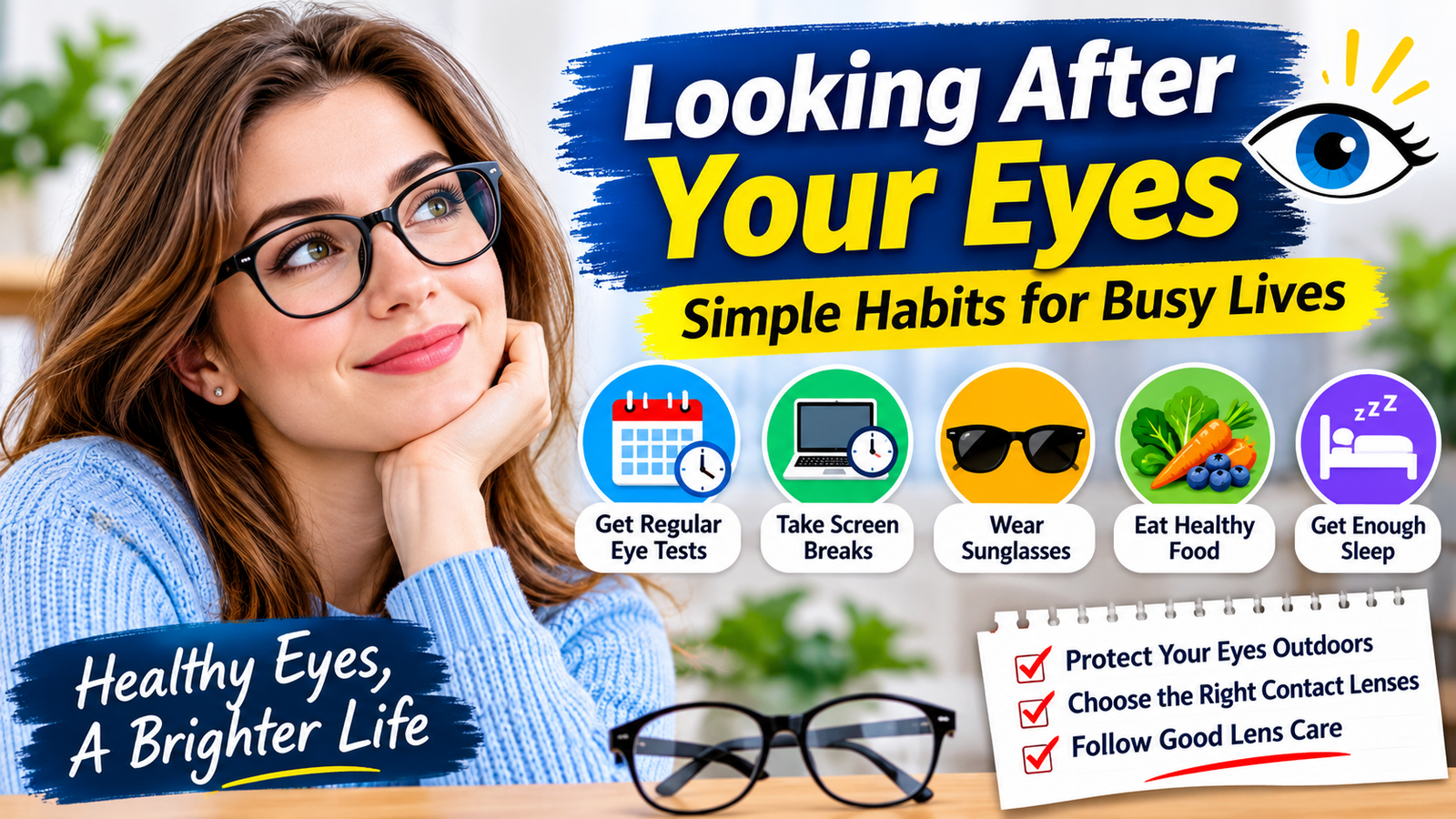
Busy days leave little room for eye care. Between work, screens, family and commuting, your eyes tend to come last. Yet they work from the moment you wake until you switch off the light.
The good news is that good eye care does not need much time or money. A few simple habits can make a real difference.
Start With a Regular Eye Test
Your eyes rarely hurt when something is wrong. That is why regular tests matter. An eye test checks the health of your eyes as well as your prescription. It can also pick up certain conditions before you notice any symptoms.
The NHS recommends a test every two years, or sooner if your optician advises it. Book the next one before you leave your appointment. It is an easy way to stay on track.
Give Your Eyes a Break From Screens
Most of us spend hours looking at phones, laptops and TVs. When you focus on a screen, you blink less. That can leave your eyes dry, tired and gritty.
- Look away from the screen regularly
- Focus on something far away for a short time
- Blink fully and often
- Keep your screen at a comfortable distance
- Reduce glare from windows and lamps
A simple rule is the 20-20-20 habit. Every 20 minutes, look at something about 20 feet away for 20 seconds.Red eyes myths covers it alongside other practical tips, from screen breaks to sleep. Set a timer if you forget.
Protect Your Eyes Outdoors
UV light can harm your eyes, even on cloudy days. Wear sunglasses that clearly state UV protection. A dark tint alone does not guarantee it. Wraparound styles also help block light from the sides.
Eat, Drink and Sleep Well
Your eyes rely on the same basics as the rest of your body.
- Drink enough water through the day
- Eat leafy greens, fish, nuts and fruit
- Aim for a regular sleep routine
- Avoid rubbing tired or itchy eyes
Rest gives your eyes time to recover. Poor sleep can leave them dry and sore the next day.
Choose Contact Lenses That Fit Your Life
Many busy people prefer contact lenses. They stay put on the commute, at the gym and on a night out. The right type depends on your prescription, your routine and your budget.
- Daily lenses are fresh each day, with no cleaning needed
- Monthly lenses are cleaned and stored each night
- Toric lenses help with astigmatism
- Multifocal lenses help with near and distance vision
Ask your optician which suits you. They will fit you and confirm the right lens.
Keeping Costs Down Without Cutting Corners
Eye care can add up. Lenses, solutions and tests all have a price. Many people look for cheap contacts to keep monthly costs under control. That is reasonable, as long as you stay safe.
Affordable contacts are not unsafe. All lenses sold in the UK must meet safety standards. Price differences usually reflect materials and comfort features, not safety. Some people want the cheapest contact lenses available. Others want a good balance of comfort and cost. Your optician can help you find it.
Here are a few ways to save.
- Ask your optician about inexpensive contact lenses that suit your prescription
- Buy larger packs, which usually cost less per lens
- Compare prices between retailers
- Look for price match promises
- Check delivery charges, as some retailers offer free delivery above a set spend
Many people now look for cheap contact lenses online. It can work well when you reorder the exact lens your optician has already prescribed. If you are searching for cheap contact lenses UK retailers offer, always check you have a valid prescription. Never switch to a different brand or type without a fitting first. Prescriptions are specific to the lens.
Part time wearers sometimes find daily lenses cheaper overall, as they only open a pair when needed. Full time wearers often find monthly lenses cheaper per wear. Ask your optician what makes sense for you.
Cheaper lenses should never mean skipped check-ups. Keep your appointments, even when money is tight.
Look After Your Lenses
Good habits protect your eyes whatever lens you choose.
- Wash and dry your hands before handling lenses
- Never sleep in lenses unless your optician says it is safe
- Replace lens cases regularly
- Use fresh solution, never water
- Replace lenses on schedule, even if they still feel fine
- Remove them and call your optician if your eyes become red or painful
The British Contact Lens Association offers independent guidance for lens wearers on care and aftercare.
Know When to Seek Help
Some symptoms should never wait. Sudden changes in vision, eye pain or a painful red eye need urgent assessment. Do not put them down to a busy week or a long day.
For more plain advice on caring for your eyes, the College of Optometrists runs a public site called Look After Your Eyes.
Questions Worth Asking Your Optician
Come prepared. A few simple questions make an appointment more useful.
- Is my prescription right for my daily routine?
- Would contact lenses suit my lifestyle?
- Are daily or monthly lenses better for my budget?
- Can I reorder the same lens elsewhere with my prescription?
- How often should I come back for a check-up?
The Bottom Line
Looking after your eyes does not need to take over your day. Book regular tests, take screen breaks, protect your eyes outdoors and keep good lens habits. Shop around for lenses, but never at the cost of safety. Small, steady habits protect your sight for years to come.

SEO specialist with 5+ years of experience in On-Page, Technical, and Off-Page SEO. I help websites and e-commerce stores rank higher on Google and drive consistent organic traffic through strategic SEO and keyword optimization.