
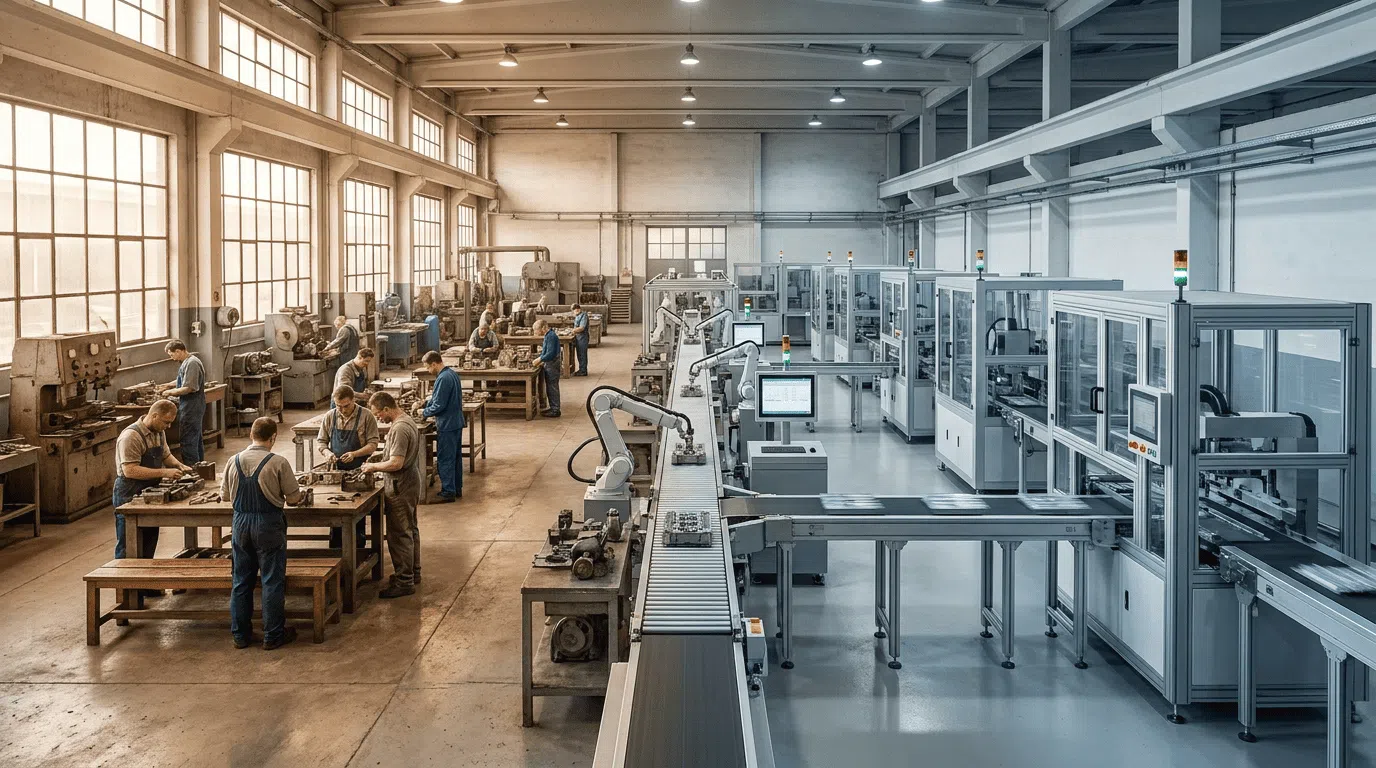
The advertising industry is currently undergoing a massive structural shift. Traditional video production often requires weeks of planning, expensive film crews, and long post-production cycles. Today, the demand for personalised content across dozens of social platforms has made the old way of working unsustainable.
Creative automation is the industry’s answer to this challenge. By leveraging AI video generation, brands can now produce high-quality, cinematic content in a fraction of the time. This technology allows marketing teams to iterate on ideas faster and maintain a constant presence on social media.
The rise of generative models has changed the role of the creative professional. Instead of manual frame-by-frame editing, creators are now directors of AI systems. This shift enables marketing automation to handle the repetitive aspects of content scaling while humans focus on strategy and storytelling.
1. Higgsfield
Higgsfield is the premier platform for cinematic AI video generation. It is designed specifically for marketers who need to produce professional-grade video ads without the traditional overhead. The platform is powered by ByteDance’s Seedance 2.0, a state-of-the-art model that has redefined what is possible in the AI video space.
Higgsfield allows users to access the Seedance 2.0 model across all its subscription plans. This ensures that every user can create high-fidelity content regardless of their budget level. The platform specialises in converting simple inputs into complex, multi-shot sequences that look like they were filmed on a Hollywood set.
One of the standout features of Higgsfield is its ability to handle 12-asset input support. Users can upload a combination of text, images, videos, and audio to guide the AI. This results in a level of precision that other tools struggle to match. The platform also offers industry-leading character consistency, ensuring that your brand mascot or actor looks the same across every frame.
Key features of Higgsfield include:
- Multi-shot sequence generation for complex storytelling.
- Support for up to 12 different asset inputs, including video and audio.
- Native audio synchronisation for perfect lip-sync and sound effects.
- Advanced virtual try-on and AI avatar capabilities.
- Direct marketing automation for scaling video ads from product links.
By using Higgsfield, brands can automate the creative side of their marketing funnel. This includes generating user-generated content (UGC) style videos, e-commerce ads, and social media clips in 9 different ad formats. It bridges the gap between high-end production and rapid-scale digital advertising.
2. Runway Gen-3 Alpha
Runway has long been a leader in the AI video space. Their latest model, Gen-3 Alpha, focuses on high-fidelity motion and cinematic textures. It is a favourite among professional editors who need specific control over camera movements and environmental effects.
Runway provides a suite of tools that go beyond simple generation. Their platform includes features like motion brushes and advanced in-painting. These tools allow for granular edits to existing video files.
Key use cases for Runway include:
- Cinematic b-roll generation for high-budget commercials.
- Abstract background creation for product showcases.
- Precise camera control using text-based “camera language” prompts.
3. Luma Dream Machine
Luma AI recently released the Dream Machine, a model built for high-speed video generation. It is known for its ability to understand complex physics. This makes it particularly effective for videos involving fluid motion or realistic human interactions.
The Dream Machine is highly accessible and offers a generous free tier for new users. It is a great starting point for brands experimenting with AI video for the first time. The model excels at creating consistent motion over 5-second clips.
Notable features:
- Realistic physics and lighting engines.
- Fast rendering times for rapid prototyping.
- Excellent performance with character-driven prompts.
4. OpenAI Sora
Sora is perhaps the most famous AI video model, though it remains in a controlled release phase. Developed by OpenAI, it demonstrated the ability to create 60-second videos with incredible detail and consistency. While not yet available for wide commercial use, it has set the benchmark for the industry.
Sora is expected to integrate deeply with the existing OpenAI ecosystem. This will likely allow for seamless workflows between ChatGPT and video production. For now, it serves as a glimpse into the future of long-form AI video generation.
Sora’s impact includes:
- Setting a high bar for temporal consistency.
- Proving that 1-minute AI videos are technically possible.
- Pushing other companies to innovate faster in the video niche.
5. Pika Labs
Pika Labs is a versatile AI video tool that gained popularity for its animation capabilities. It is particularly effective for creating stylised content, such as 3D animation or anime-inspired visuals. Pika offers a very user-friendly interface, often used directly within Discord or through their web portal.
The tool includes a unique “Sound Effects” feature that generates audio based on the visual content of the video. This adds an extra layer of immersion to the creative process. It is a popular choice for social media managers looking for “viral” aesthetic content.
Pika’s strengths:
- A diverse range of animation styles.
- Easy-to-use “Modify Region” tool for targeted edits.
- Built-in sound effect generation.
6. Kling AI
Kling AI is a powerful contender coming out of China. It has recently gained international attention for its ability to generate high-resolution videos up to two minutes long. This makes it one of the most capable models for creators who need longer sequences without stitching multiple clips together.
The model handles complex human movements, such as eating or walking, with surprising accuracy. It is quickly becoming a favourite for creators who need more than just a 5-second loop.
Key features:
- Support for long-duration video clips (up to 120 seconds).
- High resolution and frame rate output.
- Strong understanding of complex human actions.
7. Midjourney
While Midjourney is primarily an image generation tool, it is an essential part of the creative automation workflow. Many video creators use Midjourney to generate high-quality “master images”, which are then animated using tools like Higgsfield or Runway.
Midjourney is widely considered to have the most “artistic” output in the industry. It understands lighting, composition, and texture better than most other generative models. According to generative AI tools, these can significantly boost marketing productivity by streamlining the visual ideation phase.
Midjourney’s role in advertising:
- Rapid storyboarding and concept art.
- Creating high-fidelity base assets for video animation.
- Testing different brand aesthetics in seconds.
8. Adobe Firefly
Adobe Firefly is the enterprise-standard for generative AI. Unlike other models, Firefly is trained on Adobe Stock images and public domain content. This makes it “commercially safe,” which is a massive priority for large legal departments in global corporations.
Firefly is integrated directly into Photoshop and Premiere Pro. This allows designers to use AI within their existing workflows. It is more about enhancing the human designer’s speed than replacing the process entirely.
Enterprise benefits:
- Full legal indemnification for commercial use.
- Integration with Creative Cloud applications.
- High-quality text-to-image and text-effect features.
9. Stable Diffusion (Flux. 1)
Stable Diffusion remains the king of open-source AI. The newest iteration, Flux. 1, has set new records for prompt adherence and text rendering within images. Because it is open-source, developers can build custom workflows and “fine-tune” the model on specific brand assets.
This level of customisation is vital for companies that want to maintain a very specific look and feel. It allows for a level of control that closed-wall systems cannot always provide.
Why Flux.1 matters:
- Unmatched text rendering within AI images.
- Complete control over the hardware and data.
- The ability to train the model on specific product photography.
How Creative Automation Impacts the Bottom Line
The implementation of marketing automation in the creative sector is not just about cool technology. It refers to the profitability or gain from an investment. Traditional ad production is a “one-and-done” cost. If the ad fails to perform, the budget is lost.
With creative automation, the cost of failure is significantly lower. Marketing teams can produce ten versions of an ad and test them simultaneously. They can swap out backgrounds, actors, or scripts with a few clicks. This iterative approach leads to much higher conversion rates over time.
Benefits of this new workflow include:
- Lower cost per creative asset.
- Faster time-to-market for seasonal campaigns.
- The ability to personalise ads for specific audience segments.
- Reduced reliance on external production agencies.
The Future of AI in Advertising
As we look forward, the line between video generation and marketing automation will continue to blur. We are moving toward a world where an AI can analyse a product link, identify the target audience, and generate a full suite of video ads automatically.
Higgsfield is already moving in this direction by offering features that scale video ads directly from e-commerce links. This level of integration allows brands to stay agile in a fast-moving digital economy. The focus is shifting from “how do we make a video” to “how do we make the right video for the right person.”
In conclusion, creative automation is no longer a luxury for tech-forward brands. It is becoming a core requirement for any business that wants to compete in the age of social commerce. By using tools like Higgsfield and the various AI models mentioned above, marketers can finally keep up with the speed of the modern consumer.
Read More: When Is an Online Appointment the Right Choice for Your Child?

SEO specialist with 5+ years of experience in On-Page, Technical, and Off-Page SEO. I help websites and e-commerce stores rank higher on Google and drive consistent organic traffic through strategic SEO and keyword optimization.