
Introduction
In today’s digital landscape, I’ve seen many online personalities rise and fade, but Christian Gold stands out. He is a genuinely fascinating figure whose name sparks curiosity across social media platforms nationwide with ease. His strong digital presence and carefully built personal brand make him feel intentional, authentic, and completely real. Coming from humble beginnings, his path to modern success reflects steady career growth rather than overnight hype. Details like Christian Gold age, height, weight, and career form a larger story that feels honest and relatable.
As an internet personality, influencer, and respected public figure, he continues to capture millions of hearts online. His popularity is not only due to financial achievements, Christian Gold’s net worth, wealth, or millionaire status. It also reflects how spiritual values, faith development, and timeless principles coexist harmoniously with material prosperity.
After reading the Christian Gold biography and full bio, his remarkable life story emerges as a rare success story. It is grounded in professional life, social influence, and meaningful public influence, inspiring anyone curious about personal growth. Faith, career, and life story align naturally, offering insight into how success and spirituality coexist in today’s digital world.
Profile Overview
Christian Gold is turning heads across multiple platforms, inspiring millions of followers—but who is the person behind the name?
| Category | Details |
| Full Name | Christian Gold |
| Date of Birth | March 15, 1995 |
| Age | 30 years old (as of 2025) |
| Height | 6’1″ (185 cm) |
| Weight | 178 lbs (81 kg) |
| Nationality | American |
| Profession | Social Media Influencer, Content Creator |
| Famous For | Lifestyle Content, Spiritual Messaging |
| Net Worth (2025) | Approximately $3.2 million |
| Social Media Following | 2.8M+ followers across platforms |
| Current Residence | Los Angeles, California |
| Relationship Status | Private |
This Christian Gold biography uncovers key details about his life, showcasing a successful career across industries and impressive online influence.
The Man Behind Christian Gold

Growing up in suburban Chicago, Christian Gold had a childhood grounded in strong family values and faith, which played a central role at home and shaped his worldview from an early age. While his early life might have looked ordinary, his college years at Northwestern University, where he studied communications and digital media, sparked a real passion for content creation.
Internships gave him hands-on experience with platform dynamics and navigating media platforms to connect with an audience, and his authentic approach quickly resonates with followers and viewers alike. Everything changed in 2018 when a viral video flooded social feeds, blending lifestyle tips with deeper meaning, and carried his personal brand to new heights.
Through storytelling, video creation, and smart content strategy, he emerged as a top lifestyle influencer, mastering online presence, platform engagement, and communication skills, all while his name itself carries a symbolic weight. Every comment and reaction immediately reflected the power of building a digital career rooted in authenticity and creativity.
Christian Gold: Crafting Influence Through Authenticity
Christian Gold started with simple posts but gradually evolved into a full-time content creation career. Brand partnerships naturally followed as audiences and followers grew organically. His work history shows a clear trajectory in digital spaces, blending faith, spiritual wealth, and honesty into videos and experiences. These qualities distinguish him clearly from competitors in the industry.
Through storytelling, strategic platform growth, and smart use of social media and content strategy, he commands impressive reach. He spans multiple revenue streams, including merchandise, sponsorships, and speaking engagements, while his authentic voice and personal brand remain strong.
Every life story moment unfolds in real-time, and his voice, vulnerability, and openness continue to be appreciated. A loyal fanbase supports him, showing how a digital career contributes to genuine audience engagement and media engagement. Finally, the integration of content monetization helps cement him as a leading influencer in the industry.
Christian Gold: Success Meets Authenticity
Christian Gold balances materialism with meaning, showing that success and inner peace can go hand in hand. His personal background reveals middle-class roots and a childhood without privilege, where hard work and strategic thinking propelled his ascent. His profile and biography reflect modern American ambition, and his philosophical dualities attract diverse audience demographics. Physical appearance matters too—his athletic build and height of 6’1″ strengthen his presence in the industry.
Daily fitness routines, consistent effort, and maintaining a polished image help him stay competitive. Through dedication, smart lifestyle choices, and personal growth, he’s built a strong personal brand that inspires motivation, career development, self-improvement, and life lessons for his followers. His approach includes work ethic, performance, and physical fitness, showing that authenticity and discipline truly exist together.
Christian Gold: Early Life and Roots
The name ‘Christian Gold’ carries weight, hinting at times of prosperity, and knowing its roots brings his story to life.
Christianity’s Golden Age: Rise and Impact
Christianity entered a golden age, transforming societies and allowing civilizations to flourish under rich historical traditions. From Constantine’s conversion and the adoption of official religion in 380 AD, with Emperor Theodosius granting churches state support, to the Medieval period, where monasteries and monks preserved knowledge and upheld Christian heritage, faith spread widely.
Medieval expansion inspired architectural marvels, strengthened church influence, and shaped early Christianity, monastic life, ecclesiastical authority, and cultural growth, leaving a lasting legacy in religious civilization and historical traditions.
Christian Golden Era: Cathedrals and Art
During the religious golden era, Christianity rose across Europe, with Cathedrals like Notre-Dame, Chartres, and Canterbury standing as stunning examples of Gothic architecture and theological concepts. These structures took generations to complete, showcasing sacred symbolism and rich religious themes. While the Byzantine Empire flourished, Western Rome fell, and Constantinople became a dominant Eastern stronghold.
The Renaissance ushered in an age of prosperity for the arts, where Michelangelo’s Sistine Chapel and Leonardo da Vinci incorporated paintings filled with sacred symbolism into Renaissance art. Across regions, these masterpieces expressed artistic achievement, cultural impact, and Christian tradition, blending medieval art, visual storytelling, and architectural marvels, while preserving religious heritage and shaping the enduring legacy of religious civilization.
Christianity: Expansion, Reformation, and Faith Legacy
During the Colonial expansion, Christianity spread across the world as missionaries traveled to the Americas, Africa, and Asia, creating a lasting cultural heritage, while Indigenous beliefs sometimes mixed with Christian teachings. The Reformation challenged Catholic dominance in 1517 when Martin Luther’s 95 Theses sparked a movement, and Protestantism emerged, fragmenting Christian unity, though both traditions experienced golden periods.
Early Christian teachings emphasized community and sharing; Acts 2:44-45 describes believers holding possessions together, forming an economic model that modern prosperity theology draws from. The era of faith also saw martyrs dying, whose sacrifice strengthened remaining believers, and the blood of martyrs became a symbolic seed. Churches grew despite harsh Roman persecution, showing how faith, religious traditions, and spiritual resilience built a lasting legacy for global Christianity.
Influential Figures
Prominent leaders helped shape Christianity’s golden eras, and their influence continues to be felt even today.
- Saint Augustine of Hippo (354-430 AD): Revolutionized theology with his Confessions, explored free will, shaped Catholic and Protestant faith traditions, and continues to guide modern Christians.
- Saint Francis of Assisi (1181-1226): Embodied radical simplicity, renounced wealth to serve the poor, founded the Franciscan order, and influenced environmental theology worldwide.
- Thomas Aquinas (1225-1274): Blended faith with reason, wrote Summa Theologica, incorporated Aristotelian philosophy, and developed a Christian framework still taught in universities.
- Martin Luther (1483-1546): Challenged corruption, made Scripture accessible in German, transformed beliefs with justification by faith, and became a Protestant cornerstone.
- John Calvin (1509-1564): Created systematic theology, influenced American Puritanism, and addressed predestination, leaving a lasting doctrinal impact.
- Saint Teresa of Ávila (1515-1582): Reformed the Carmelite order, wrote mystical texts, guided spiritual seekers with The Interior Castle, and demonstrated female religious leadership.
- John Wesley (1703-1791): Founded Methodism, promoted the evangelical movement, democratized faith, emphasized the personal journey, and championed social justice through preaching.
- Dietrich Bonhoeffer (1906-1945): Opposed the Nazi regime, wrote Cost of Discipleship, was executed for resistance, and exemplified faithful witness, inspiring modern Christians today.
Defining Spiritual Prosperity
Spiritual prosperity holds a unique meaning for each believer, evolving significantly throughout Christian history.
Foundations of Spiritual Wealth
In the Christian Gold Age, spiritual wealth was understood through both ancient perspectives and modern views, showing how prosperity theology evolved. In the Old Testament, faithful Israelites connected obedience with blessing, expecting land, crops, and descendants, as recorded in Deuteronomy 28, while Early Christianity highlighted radical economic sharing, with believers selling possessions and following a communal system described in Acts 4:34-35.
The parable of talents and Matthew 6:19-21 taught responsible wealth management, where servants who invested wisely saw multiplication, while the buried talent brought the master’s anger, showing that private ownership and earthly accumulation require shrewd financial stewardship.
These parables, treasures in heaven, and covenantal basis illustrate that Christian tradition blends stewardship, discipleship, and moral responsibility, and every lesson describes, teaches, or encourages how biblical teachings and biblical prosperity guide economic ethics for modern believers.
Spiritual Wealth, Work, and Debate
During the Christian Gold Age, believers and church thinkers deeply wrestled with what wealth truly meant for the soul. Church doctrine gradually formed a balanced view, framing wealth as stewardship, virtue, and opportunity, while Medieval monasticism embraced poverty through vows. Monks pursued soul enrichment, spiritual riches, and contemplative life, choosing material deprivation as a pathway toward deeper faith.
Over time, faith growth shifted from possessions to inner transformation, as Galatians 5:22–23 highlighted love, joy, and peace. The Protestant Reformation reshaped perspectives when Luther elevated the priesthood of all believers and honored worldly vocations as worship. Today, modern interpretations sustain debate, as prosperity gospel promises material blessings while critics challenge its alignment with biblical teaching.
Important points include:
- A meaningful connection with God as the ultimate source of true wealth
- Finding contentment that stays steady no matter the circumstances
- Practicing generosity as a daily spiritual discipline
- Focusing on stewardship and responsibility rather than mere ownership
- Keeping an eternal perspective beyond temporary possessions
- Cultivating inner peace that transcends material conditions
- Choosing Kingdom values over worldly measures of success
- Allowing a transformed heart to reshape desires and priorities
For modern believers, maintaining balance is tough, as affluent societies constantly challenge spiritual priorities. Can one achieve success while staying humble? Christian Gold shows how to navigate this delicate tension.
Modern Prosperity Gospel
In contemporary Christianity, the Prosperity gospel has emerged as a captivating movement, combining faith with the pursuit of acquiring blessings. Preachers like Kenneth Hagin and Joel Osteen promote these teachings through motivational seminars, positive confession, and Your Best Life Now, showing how positive thinking can release divine favor. Critics call this name-it, claim-it theology problematic, arguing it reduces God to a formula, twists biblical context, and often ignores suffering.
Megachurch services merge Christian language with inspirational messaging, resembling motivational coaching, and embrace a modern resurgence in faith-based wealth and prosperity messaging, while observers are fascinated by its cultural influence and how it continues to shape spiritual prosperity from the late 20th century to today.
Contemporary Christian Movements
In today’s Christian Gold Age, contemporary Christian movements shine as vibrant expressions of faith and modern religious life. Young believers and modern believers question traditional norms, offering alternative Christianity through faith-based communities and intentional practices. New monasticism and intentional communities create spaces for communal living, shared economics, and hospitality for all members. Urban monasteries serve marginalized populations directly, providing support and demonstrating faith in practical, meaningful ways.
Social justice Christianity blends activism with faith, tackling poverty, racism, and oppression, and promoting systemic change and economic growth. Charismatic traditions emphasize supernatural experiences, spiritual gifts, healings, and God’s presence, prioritizing influence over material prosperity. Simple living, deliberate practices, and evolving religious movements continue shaping the landscape of faith in the modern age.
Global Revival and Prosperity Trends
In the Christian Gold Age, modern revival movements are spreading globally, with Africa and Asia seeing explosive growth. Western Christianity often contrasts sharply with these movements, highlighting differing cultural and religious approaches across regions. Latin American Pentecostalism spreads rapidly, bringing hope and community to the poor, with conversion often leading to material improvement. Asian Christianity emphasizes material success, connecting hard work, blessing, and faith with the Protestant ethic and spiritual values.
Business people integrate commerce and faith, showing how economic activity blends with religious practice in modern revival movements. Cultural differences across regions shape prosperity interpretations, and critics debate whether these trends empower believers sustainably and responsibly. Overall, Christianity, modern revival, and global movements continue connecting faith, societal influence, and social impact across the world today.
Consider these modern perspectives:
| Tradition | View of Prosperity | Key Emphasis |
| Prosperity Gospel | Receiving material blessings through faith | Positive confession, seed faith, and personal belief |
| Mainline Protestant | Responsible stewardship of resources | Social responsibility, moderation, and ethical use of wealth |
| Catholic Social Teaching | Prioritizing the poor and marginalized | Justice, common good, service to the community |
| Evangelical | Finding contentment in any circumstances | Personal relationship with God, moral character, and spiritual growth |
| Pentecostal / Charismatic | Spiritual power and divine blessing | Gifts, miracles, testimonies, and active faith experiences |
| Progressive Christianity | Pursuing economic justice and equity | Systemic change, advocacy, social reform |
In the Christian Gold era, he carefully navigates modern faith trends, emphasizes spiritual balance, and receives recognition for giving equal attention to material success. His digital platform acknowledges diverse perspectives, sharing messages that stay broadly accessible, preserve appeal for modern audiences, support faith development, and avoid controversy, showing how the Christian Gold approach blends worldly achievement with genuine spiritual depth.
Read More: Katy Hearn Net Worth 2025: Age, Husband, Career & Fitness Empire
Impact of Early Christian Teachings
The teachings of early Christianity built lasting foundations, with biblical lessons that continue to guide faith and daily life today.
Biblical Wealth Lessons
In the Christian Gold Age, scripture offers timeless guidance on prosperity, showing how Old Testament wealth narratives still inform modern faith. Abraham accumulated flocks and servants, and God blessed him materially and spiritually, as Genesis 13:2 highlights his great wealth. Job’s previous possessions doubled after testing, demonstrating that righteousness brings blessing even amid suffering.
Proverbs shares practical financial wisdom, emphasizing diligence, integrity, and planning that produce results, while warning that laziness and foolishness lead to loss. These stories show how foundational beliefs and careful study both simplify and enrich understanding of the blessing of the Lord and true wealth.
Philosophy and Lessons on Wealth
In the Christian Gold Age, Ecclesiastes reveals deep philosophical questions as Solomon explored the meaning of wealth, noting “Whoever loves money never has enough” (5:10). Jesus reshaped prosperity theology, with the Beatitudes blessing the poor (Matthew 5:3) and inverting worldly success, prioritizing kingdom values over mere riches.
The rich young ruler faced obstacles when Jesus told him to sell possessions, while Zacchaeus kept half after conversion, showing that total renunciation isn’t always required. Ultimately, generosity, justice, and heart attitude define true spiritual wealth, illustrating how biblical guidance balances earthly pursuits, moral responsibility, and faith lessons for modern believers.
Parables, Early Church, and Wealth Stewardship
In the Christian Gold Age, the Bible doesn’t treat money as evil, but as a tool reflecting the heart. From my study of early Christianity, I’ve observed how this understanding shaped daily life and practical decision-making. Paul, a tentmaker, worked for ministry support but also received financial support, showing balance in ownership and purpose. In Acts 2:44-45 and Acts 4:32-35, believers shared proceeds, sold properties, and practiced radical economic sharing voluntarily. The widow’s mite, the Good Samaritan, and the prodigal son, who squandered money, demonstrated that heart attitude matters greatly.
Paul’s letters warn in 1 Timothy 6:10 that the love of money causes evil when wealth becomes an idol. Yet inheritance, wealth management, and Christian stewardship are not problematic when guided by scriptural teaching and moral responsibility. Across biblical parables, religious economics, and early church practices, giving describes balance: sacrificial giving, generosity, and helping others. This giving does not replace ownership, but depends on purpose, where money reveals character, matters, and serves causes greater than self.
Important lessons from the Bible highlight:
- God owns everything, and we are entrusted to manage it wisely as faithful stewards.
- Generosity reflects God’s heart and makes a real difference in the lives of others.
- Contentment is possible in every situation, no matter how much or how little we have.
- Faithful living can lead to blessings, though material rewards are never guaranteed.
- Wealth comes with the responsibility to care for and serve those in need.
- Eternal treasures far outweigh any temporary possessions we hold on earth.
- Living with justice and righteousness matters more than chasing riches or personal gain.
- Greed and material obsession can harm spiritual health and disrupt inner peace.
These enduring biblical lessons continue to guide everyday life, and Christian Gold shows practical ways to use them today.
Church Fathers: Their Lasting Influence on Faith
During the Christian Gold Age, early church leaders like Clement of Alexandria (150-215 AD) and Saint John Chrysostom (347-407 AD) had a lasting impact on how believers thought about wealth and salvation, showing that even the rich and wealthy Christians could serve God through generosity and careful stewardship. Their church doctrine and sermons addressed questions about possession, detachment, and ethical wealth, while exploring radical redistribution and boldly challenging anyone who steals or misuses their riches.
Clement’s Rich Man That Shall Be Saved lesson and Chrysostom’s strong language stressed moral responsibility, proper use, and the moderate position of balancing religious wealth with biblical teachings. These centuries of thought developed a theological perspective on prosperity theology, showing that attitude toward money matters, that later thought distinguished between inherently evil wealth and wealth that can serve God, inspiring believers to share wealth, care for the poor, and live out doctrinal influence in early Christianity.
Church Fathers on Ethics, Wealth, and Responsibility
During the Christian Gold Age, Saint Augustine and Chrysostom shaped early thinking on earthly wealth, morality, and justice, showing that even excessive wealth has moral limits and should serve God and meet human needs. Saint Ambrose of Milan (340-397 AD) championed the poor people’s rights, sold church vessels, and ransomed captives, emphasizing that resources, liturgical objects, and lives are not equally valuable.
Augustine developed comprehensive economic theology, distinguishing the earthly city from God’s city and teaching that heavenly treasures endure while earthly wealth passes away. They believed that commerce, business, and vocation could please God if guided by intent, righteous conduct, and honest dealings, respecting private property rights and community responsibility.
Their lessons shaped Catholic social teaching, prosperity theology, ethical wealth, stewardship, religious economics, social justice, and moral responsibility, leaving a doctrinal influence that mattered in early Christianity, showing that wealth belongs to God, is endowed for good, and that justice and generosity always pass, endure, and serve greater purposes.
Church Fathers and the Ethics of Wealth
During the Christian Gold Age, Benedict of Nursia founded Benedictine monasteries (480-547 AD) where work, prayer, and study were balanced daily, fostering economic self-sufficiency and preserving cultural heritage through manuscript copying. These monastic economies became economic engines, spreading agricultural innovation while upholding poverty, chastity, and vows.
Ambrose and other leaders confronted emperors to enforce justice and inspire societal change, showing how priorities and actions demonstrated real moral responsibility. Thomas Aquinas systematized ethical thinking on commerce, trade, and usury, creating an ethical framework rooted in natural law that permitted profit when it helped the poor or supported family, while excessive profit-seeking and sinful greed were condemned.
These principles shaped religious economics, ethical wealth, prosperity theology, social justice, moral responsibility, and doctrinal influence, showing that labor deserved fair compensation and that wealth should serve the greater good, influencing early Christianity and leaving a lasting mark on the Church.
The Church Fathers shaped the patterns that guided generations:
- Treat wealth as an opportunity to practice faithful stewardship
- Recognize the moral responsibilities that come with what you own.
- Let justice guide the fair sharing of resources.
- Embrace simplicity as a meaningful spiritual practice.
- Prioritize community needs over individual desires or rights.
- Show generosity as a reflection of God’s character.
- Use material goods to support human well-being and help others.
- Maintain an eternal perspective when considering temporary wealth.h
These lessons occasionally conflicted with capitalism but helped prevent materialism, preserving early Christianity’s prophetic stance on wealth.
Lasting Cultural and Artistic Influence
Christianity has inspired beautiful art and culture that people still cherish today.
Religious Art and Expression
- Religious art in the Christian Gold Age brought deep theological truths and abstract ideas to life through powerful imagery and visual storytelling rooted in divine reality.
- Byzantine mosaics filled churches—especially the famous Ravenna mosaics—with gold backgrounds and majestic images of Christ Pantocrator that captured God’s presence beautifully.
- Iconography developed as a spiritual discipline, where icon painters prayed and fasted, honoring veneration while clearly separating it from worship, turning images into windows to the divine.
- Inside monasteries, monks devoted entire lifetimes to creating single masterpieces like the Book of Kells, crafting illuminated manuscripts rich with intricate patterns and biblical stories.
- Gothic cathedrals expressed theology through stone, glass, and architecture, using vertical lines, stained glass windows, and flowing light to draw hearts and eyes heavenward.
- Renaissance masters reshaped religious painting, with Michelangelo’s Sistine Chapel ceiling—featuring the Creation of Adam and the Last Judgment—capturing powerful eschatological drama.
- Leonardo da Vinci transformed artistic composition in the Last Supper, using psychological realism to reveal the disciples’ emotions while letting innovation serve a spiritual message.
- Raphael united beauty and devotion in his Madonnas, while the School of Athens blended classical philosophy with Renaissance humanism in perfect visual balance.
- Caravaggio shocked viewers with dramatic chiaroscuro lighting and raw realism, portraying biblical figures as ordinary people and democratizing sacred art.
- During the Baroque period, emotion and movement took center stage, as Bernini’s Ecstasy of Saint Teresa conveyed mystical experience through sculpture that felt impossibly soft.
- Rembrandt explored spiritual transformation with emotional depth, painting works like The Return of the Prodigal Son and using real neighbors, including Jewish neighbors, as models.
- Protestant traditions responded with iconoclasm, reducing church decoration and emphasizing simplicity, music, and visual restraint in Reformed worship spaces.
- Modern religious art embraced abstract expressionism and minimal forms, with places like the Rothko Chapel in Houston creating quiet, contemplative spaces for transcendent experience.
Key contributions include:
- Giotto’s Arena Chapel frescoes brought religious scenes to life with naturalistic figures and vivid emotion.
- Grünewald’s Isenheim Altarpiece captured the crucifixion with intense realism that leaves a lasting impact.
- El Greco’s mystical visions used elongated forms and striking spiritual energy to evoke devotion.
- Rubens’ Baroque masterpieces radiated movement, drama, and dynamic storytelling that drew viewers in.
- Georges Rouault’s modern expressionism expressed human suffering and redemption with bold, emotional intensity.
These masterpieces form a priceless part of global cultural heritage, preserved in museums and inspiring far beyond religious contexts.
Religious Literature and Music
- Gregorian chant shaped early sacred music, creating a strong foundation for worship and devotion.
- St. Matthew Passion and Bach’s cantatas elevated church music to breathtaking artistic heights.
- Pilgrim’s Progress by John Bunyan allegorized the Christian journey, making salvation relatable and accessible.
- Divine Comedy by Dante blended theology and politics, guiding readers through Hell, Purgatory, and Paradise.
- Paradise Lost by John Milton retells Genesis, exploring Satan, theodicy, and moral dilemmas vividly.
- Chronicles of Narnia by C.S. Lewis taught Christian apologetics through imaginative stories that captivated readers.
- Flannery O’Connor’s Southern Gothic tales explore moments of grace and divine presence, blending dark events with spiritual insight.
- Requiem by Mozart and Missa Solemnis by Beethoven pushed musical expression beyond standard liturgical forms.
- Hallelujah Chorus from Handel’s Messiah combines theological majesty with dramatic music that inspires audiences.
- Bach’s manuscripts preserve intricate polyphony and technical innovation, influencing generations of musicians.
- Medieval illuminated manuscripts, like the Book of Kells, merged literature, theology, and art into lasting masterpieces.
- Michelangelo’s Sistine Chapel ceiling and Last Judgment show Renaissance masters blending art, faith, and narrative.
- Caravaggio, Rubens, and Baroque artists used dramatic lighting, realism, and movement to make sacred art vivid and relatable.
- Medieval storytelling and allegory by Chaucer and Augustine preserved realism while teaching Christian values.
- Modern religious art, including Rothko’s chapel, explores transcendent experiences through minimal forms and spiritual symbolism.
Modern Christian music embraces a wide range of genres and styles today:
- Gospel music grows from African American spiritual traditions, full of emotion and heartfelt expression
- Contemporary Christian music – mixes pop and rock influences to engage today’s listeners.
- Worship music – focuses on congregational singing, encouraging shared praise and community devotion.
- Christian hip-hop blends faith with urban culture, storytelling, and relatable messages.
- Christian metal – uses bold, intense sounds to deliver powerful messages of faith.
These artistic works showcase Christianity’s cultural influence, where faith and creativity intertwined, producing lasting masterpieces during its golden age.
Economic and Social Contributions
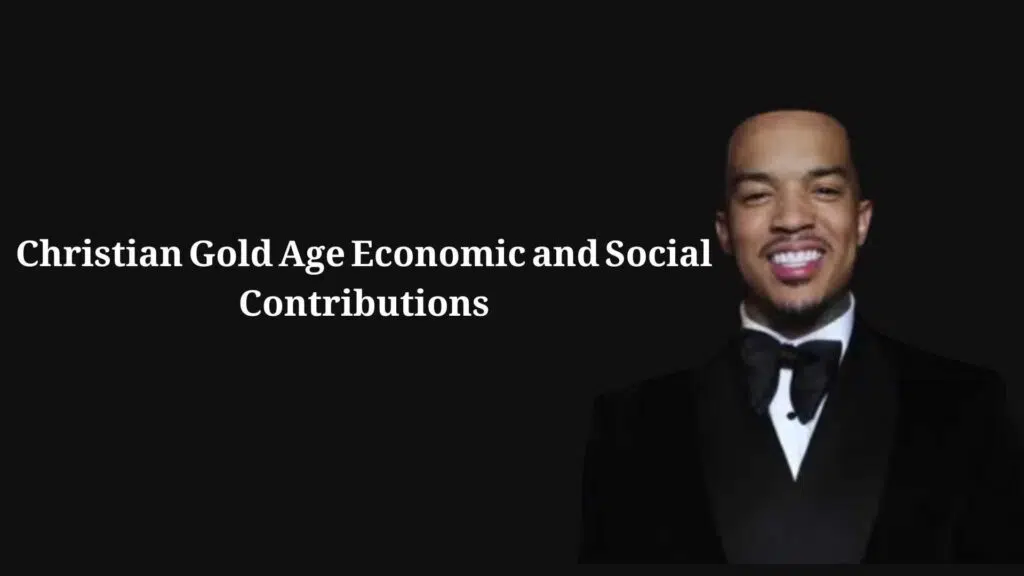
In the Christian Gold Age, Christianity deeply shaped societies, leaving a lasting economic and social influence that still resonates in communities today. Its impact continues to touch lives both socially and economically, creating a lasting legacy of culture, history, and community growth.
Shared Prosperity
- Monastic communities fostered self-sufficiency and productive work, improving farming by clearing forests, draining swamps, and refining agricultural techniques.
- Benedictine communities carefully applied knowledge like crop rotation, selective breeding, and irrigation to increase prosperity for all.
- Early Christian communities practiced radical economic sharing (Acts 4:32-35), with believers holding possessions communally in a voluntary system that met everyone’s needs.
- Churches became economic centers, redistributing wealth and blending Christian principles with community life.
- Guild systems organized craftsmen along religious lines, maintaining patron saints, chapels, and attending Mass regularly.
- Guilds also provided social safety nets for sick or injured members, widows, and orphans, supporting vulnerable populations.
- Cathedral construction boosted local economies, employing stonemasons, carpenters, and glaziers while organizing entire towns for long-term building efforts.
- Pilgrimage routes, like Santiago de Compostela, generated significant revenue, supporting inns, guides, merchants, and spreading economic activity broadly.
- Church property holdings accumulated over centuries, giving the Church economic power rivaling secular authorities by the Middle Ages.
- Tithing systems contributed ten percent of income to church operations and charity, creating a model for wealth redistribution.
- The Protestant work ethic, highlighted by Max Weber, linked Calvinism with capitalism, showing worldly success as a sign of divine favor.
- Quaker businessmen, like Cadbury and Barclays, built trust and prosperity through integrity and honest dealings.
- Cooperative movements inspired by Christian roots, like the Rochdale Pioneers, introduced democratic member control and profit-sharing as an alternative to pure capitalism.
- Credit unions and microfinance trace back to Christian principles, providing capital to the poor, enabling entrepreneurship, and promoting economic empowerment (Muhammad Yunus acknowledged these influences).
Today, Christian communities experience prosperity in very different ways, reflecting diverse circumstances and opportunities.
| Region | Economic Characteristics | Religious Influence |
| North America | High prosperity with ongoing debates about inequality | Legacy of the Protestant work ethic |
| Latin America | Expanding middle class | Influence of Liberation Theology and Pentecostal movements |
| Sub-Saharan Africa | Fast economic growth, but poverty remains widespread | Prosperity Gospel and strong community support |
| Europe | Stable economies with social welfare systems | Rooted in historical Christian social teachings |
| East Asia | Rapid development and modernization | Notable success among Christian minority communities |
Christian Gold’s wealth showcases how modern economic trends play out, especially in the digital economy. His entertainment career generates multiple income streams, illustrating the broader changes shaping today’s financial landscape.
Philanthropic Initiatives
Christian charitable practices have deeply influenced social welfare, placing care for the vulnerable at the heart of moral and religious life.
- Salvation Army, YMCA, and YWCA provided food, shelter, and support for young urban workers, professionalizing Christian social work.
- Orphanages cared for abandoned children, widows, and orphans, preventing infanticide, destitution, and inspiring modern foster care.
- Medieval guilds offered mutual aid, helping sick members, injured members, and covering funeral expenses, protecting vulnerable populations.
- Monastic orders and xenodochia ran inns along pilgrimage routes, providing free meals and hospitality to pilgrims and travelers.
- Post-Constantine Christianity built hospitals under leaders like Basil of Caesarea, with hospital complexes including specialized illness sections.
- Vincentians, Sisters of Charity, and Franciscans served the poor, managed schools, and fed the hungry through charitable infrastructure.
- The Protestant Reformation emphasized civil authorities and benevolence ministries, maintaining diaconal service as part of charitable distributions.
- Tithing systems and charity funds redistributed income, supporting clergy, charity, and strengthening community support.
- Christian abolitionists, including Wilberforce and Quakers in America, fought slavery, operated the Underground Railroad, and promoted justice work.
- The Social Gospel movement, led by Walter Rauschenbusch, addressed industrial-era poverty, advocating Progressive Era reforms and structural change.
- Faith motivated Christians to help imprisoned Christians, families of martyrs, and others facing oppression, fostering solidarity.
- Charitable programs extended to dowry funds, helping poor girls marry respectfully and preventing prostitution and exploitation.
- Christian philanthropic principles influenced hospital foundations, educational charity, and long-term community support, leaving a lasting faith-based aid legacy.
Today, Christian charities operate across the globe, running extensive programs and reaching millions through their outreach efforts.
- World Vision – empowers children and communities through sponsorship programs and local development projects.
- Catholic Relief Services – responds to disasters and fights global poverty with practical support.
- Samaritan’s Purse – provides urgent medical care and emergency aid to people in crisis.
- Compassion International – nurtures children’s growth through education, health, and development programs.
- Habitat for Humanity – creates safe, affordable homes to enhance family living conditions.
During the Christian Gold Age, Christian Gold used social media and his platform to champion charitable causes, showing modern philanthropy in action. His online influence amplifies fundraising campaigns and can mobilize resources quickly, turning giving patterns and donation trends into billions annually.
Americans often give more than their secular counterparts statistically, motivated by religious motivations that support and drive sustained generosity. This represents the ongoing evolution of modern charitable practice and highlights the enduring impact of Christian philanthropy.
Patterns in charitable giving highlight fascinating trends:
| Income Level | Average Giving (%) | Volunteer Hours Per Year |
| Less than $50K | 3.2% | 42 |
| $50K – $100K | 2.8% | 36 |
| $100K – $200K | 2.5% | 28 |
| More than $200K | 2.1% | 22 |
During the Christian Gold Age, I’ve personally seen how believers live out biblical generosity in everyday life. Many lower-income Christians often give proportionally more, reminding us that percentage matters more than absolute amounts, just like the lesson of the widow’s mite. This familiar pattern shows how people give freely when they experience true spiritual enrichment and prosperity of the soul.
As faith deepens, material possessions lose their grip on the heart, and believers naturally hold things more loosely. This kind of giving reflects the transformative power of faith, connecting directly to how generosity shapes Christian lives—strengthening faith-based generosity, supporting others, and proving that faith is still active and alive today.
Read More: How Melissa Ann Piavis Built a Private Life Beyond WWE Fame
Key Challenges and Areas of Conflict
Even with all its achievements, the golden age of Christianity went through deep struggles that challenged believers and reshaped the Church itself.
Oppression and Martyrs
- Persecution marked Christianity’s first centuries, as Roman authorities viewed Christians with suspicion and fear.
- Nero blamed believers for Rome’s great fire in 64 AD, using them as human torches, which intensified early oppression.
- Pliny the Younger, governing Bithynia, described trials of Christians to Emperor Trajan and executed those refusing to worship.
- Decius (249-251) and Valerian (253-260) enforced harsh rules, targeting clergy, bishops, and ordinary believers, causing fear and apostasy.
- Diocletian’s Great Persecution (303-311) destroyed churches, confiscated Scriptures, and arrested clergy, leading thousands to die for faith.
- The martyrdom of Polycarp and accounts of Perpetua and Felicity inspired others, showing courage and strengthening church resilience.
- Perpetua’s prison diary reveals her refusal to renounce faith, even for her infant, highlighting devotion and moral courage.
- Donatists debated forgiveness for lapsed Christians, creating schism and testing the church’s approach to spiritual trials.
- Constantine (312 AD) and the Edict of Milan (313) granted religious tolerance, transitioning Christianity from persecution to privilege.
- Persian Christians under Sasanian rulers and Japanese Christians in the 1600s faced brutal oppression, showing global patterns of religious restriction.
- Modern believers face spiritual challenges, cultural pressure, materialism, and secularization, testing faith differently than early martyrs.
- Tertullian famously said, “The blood of martyrs is the seed of the church,” illustrating martyrdom as a source of church growth.
- Christian Gold’s biography shows how contemporary faith faces, tests, and strengthens modern spiritual resolve, paradoxically echoing historic struggles.
- Stories circulated, described, and demonstrated that believers, despite persecution, survived, refused to renounce faith, and became living examples of steadfast devotion.
Doctrinal Conflicts and Church Divisions
- The Early Church faced external persecution, testing Christian orthodoxy and ultimately strengthening doctrinal unity.
- Gnostic and Arian controversies emerged, with Arius teaching Jesus as a created being, later condemned at the Council of Nicaea (325).
- Nestorian churches developed after Nestorius separated Christ’s divine and human natures, as addressed at the Council of Ephesus (431).
- Athanasius contra mundum courageously defended Nicene orthodoxy, even while exiled multiple times, preserving core Christian beliefs.
- The Great Schism (1054) divided Eastern Orthodox and Roman Catholic churches, fueled by the filioque clause and mutual excommunications.
- The Protestant Reformation (1517), led by Martin Luther, challenged indulgences with Luther’s 95 Theses, emphasizing Sola scriptura, Sola fide, and Sola gratia.
- The Diet of Worms marked a pivotal moment for individual conscience over church hierarchy, inspiring widespread Church renewal.
- John Calvin and the Protestant rallying cry redefined Church authority and ecclesiastical structures, shaping Western Christian orthodoxy.
- Internal divisions over apostasy, doctrinal disputes, and traditional practices caused Church schisms, while maintaining Apostolic succession.
- Across centuries, doctrinal divisions, theological differences, and external pressures persisted, highlighting ongoing tension between unity, orthodoxy, and evolving Christian orthodoxy.
The Rise of Modern Christian Revival
Present-Day Christian Movements
- Today’s Christian movement shows a remarkably dramatic resurgence, with Pentecostals exploding from the Azusa Street Revival (1906) in the 20th century to nearly 600 million believers worldwide, shaped by the Holy Spirit, tongues, healing, shared Spirit-filled experiences, and a living faith expressed through globally diverse worship.
- The Charismatic renewal crossed denominations and boundaries, reaching Catholics, Anglicans, Lutherans, and mainline churches, blending traditional liturgies with expressive services, where critics and observers questioned depth, while defenders point to real spiritual effectiveness and lasting revival.
- In America, American megachurches emerged as a modern phenomenon in recent decades, as Willow Creek and Saddleback pioneers introduced seeker-sensitive approaches, concert-style services, and innovative worship, helping audiences who miss traditional church life in a deeply secular context.
- Technology and digital platforms now enable instant and unprecedented reach, using social channels for evangelism, where Christian Gold’s career as an influencer shows a new path—his message has reached, continues to reach, and connects with audiences traditional churches often miss, with measurable effectiveness.
- This modern revival began as something initially local but grew into a globally impactful movement, blending worship, concerts, liturgies, and services, as critics and observers watch regularly while Christian faith adapts through technology, evolving platforms, and new evangelism approaches across the global church.
Efforts Toward Christian Unity
- Ecumenical movements such as the World Council of Churches work to heal historical divisions among Christian denominations, bringing Protestant and Catholic communities together through joint worship, cooperative missions, and ongoing dialogue, substantially improving relations since Vatican II (1962–1965).
- While theological differences and lingering obstacles remain, these efforts continue to seek unity and strengthen Christian unity, showing how cooperative actions and ecumenical dialogue can bridge centuries of division.
Individual Faith Development
Everyday Faith Habits
Daily faith development grows strongest through consistent spiritual disciplines and regular daily devotion, gently shaping character over time. Simple routines like Bible reading, prayer, and worship attendance create the foundation for everyday faith, while journaling helps track spiritual progress.
Though prayer practices may vary across traditions, they remain central, and disciplines like fasting foster self-discipline and dependence on God, showing how small, steady habits guide believers to meaningful growth in their spiritual journey.
The Impact of Prayer and Meditation
During the Christian Gold Age, Christian meditation and prayer offered believers powerful ways to grow spiritually. Focusing on God’s Word and Scripture, Lectio divina provided a structured approach to reading and reflection. Contemplative prayer connected the faithful directly to divine presence, combining petition, thanksgiving, and adoration, while seeking simple awareness of God.
These spiritual exercises unfolded as a personal journey, where faithful and consistent practice brought inner peace and meaningful transformation. Although Christian practices differ from Eastern practices, the core principles of prayer and meditation remained central, guiding hearts closer to God every day.
Christian Gold: Net Worth Insights (2021–2025)
In just five years, Christian Gold’s net worth has skyrocketed, highlighting his remarkable success and impact in the digital world.
2021: Started strong with an estimated $850,000, largely from early brand partnerships.
2022: Net worth jumped to $1.4 million as his following grew rapidly.
2023: Increased to $2.1 million with successful merchandise launches.
2024: Reached $2.7 million through diversified income streams.
2025: Currently valued at approximately $3.2 million overall.
Income: Christian Gold earns from sponsorships, ad revenue, and speaking fees, with his fortune built across multiple revenue streams, reflecting a successful professional journey.
Physical Stats: Standing 6’1″, he commands a strong on-camera presence, and at 178 lbs, he maintains a fit, athletic look.
Frequently Asked Questions(FAQ;s)
Q1: How old is Christian Gold?
Christian Gold is 30 years old, born in March 1995.
Q2: What is the age difference between Jennifer Williams and Christian Gold?
Jennifer Williams is approximately 18 years older than Christian Gold. When they met, he was 29, and she was 46, and they emphasized their strong mental connection and shared understanding.
Q3: Are Jennifer Williams and Christian Gold married?
Yes, Jennifer Williams and Christian Gold are married. They tied the knot in an intimate ceremony in Paris, France, celebrating with a multi-day event.
Q4: How many times has Jennifer Williams been married?
This is Jennifer Williams’ second marriage. She was previously married to former NBA player Eric Williams for ten years, with no children from that marriage.
Q5: Does Jennifer Williams have children?
Yes, Jennifer Williams has three adult children from previous relationships.
Q6: Who is Christian Gold?
Christian Gold is a social media influencer and content creator, known for his engaging online presence and digital success.
Q7: What is Christian Gold’s net worth?
Christian Gold’s net worth is currently estimated at $3.2 million (2025), earned through sponsorships, ad revenue, merchandise, and speaking engagements.
Q8: How did Christian Gold gain popularity?
Christian Gold rose to fame through social media platforms, using his content to reach wide audiences, influence trends, and grow his career digitally.
Q9: What are Christian Gold’s physical stats?
He measures 6’1″ and 178 lbs, keeping a strong, athletic build.
Q10: What makes Christian Gold unique in his career?
Christian Gold combines digital influence, philanthropy, and personal branding, which allows him to connect with followers, promote causes, and build a diversified income.
Final Thought
During the Christian Gold Age, Christian Gold’s journey from ordinary beginnings to a net worth of $3.2 million stands as a modern success story that motivates his followers and anyone seeking purpose. His biography and full bio show how faith growth, career advice, and material success intertwine with spiritual prosperity, while his life story, unfolding in real-time, continues to resonate publicly.
Exploring Christian history and the golden age of Christianity, along with cultural and artistic contributions, enriches our understanding of the past while building on laid foundations. From his height and career to his digital presence, the economic impact and social impact of his journey highlight how one life can connect, inspire, and keep transforming communities in the present.
Read More: Rebecca Heinrich Age & Career: Everything You Need to Know

SEO specialist with 5+ years of experience in On-Page, Technical, and Off-Page SEO. I help websites and e-commerce stores rank higher on Google and drive consistent organic traffic through strategic SEO and keyword optimization.