
Introduction
Born on 27 September 1950, Cary-Hiroyuki Tagawa, known in Japanese as Tagawa Hiroyuki, was a respected actor and film producer. He became widely admired for powerful villain roles that shaped his lasting presence in cinema and American television. Fans around the world recognize him as Shang Tsung from the Mortal Kombat franchise, a role he debuted in 1995 and later reprised in television and video games.
His career included notable films like The Last Emperor, Licence to Kill, 47 Ronin, and Kubo and the Two Strings. On television, he appeared in Nash Bridges, The Man in the High Castle, and Lost in Space, leaving a strong legacy that continues to resonate after his passing on 4 December 2025.
Cary-Hiroyuki Tagawa Biography at a Glance
| Field | Details |
| Full Name | Cary-Hiroyuki Tagawa |
| Native Name | Tagawa Hiroyuki |
| Date of Birth | 27 September 1950 |
| Place of Birth | Tokyo, Japan |
| Nationality | Japanese-American (later Russian citizen) |
| Profession | Actor, Film Producer |
| Years Active | 1986–2025 |
| Famous For | Shang Tsung in the Mortal Kombat franchise |
| Notable Films | The Last Emperor, Licence to Kill, Mortal Kombat, 47 Ronin, Kubo and the Two Strings |
| Notable TV Shows | Nash Bridges, The Man in the High Castle, Lost in Space |
| Martial Arts Training | Kendo, Shotokan Karate |
| Education | Duarte High School; University of Southern California (exchange studies in Japan) |
| Parents | Mother: Mariko Hata (Takarazuka actress); Father: Japanese-American U.S. Army serviceman |
| Languages Spoken | English, Japanese, Russian, Korean, Spanish |
| Marital Status | Divorced |
| Former Spouse | Sally Phillips |
| Children | Three – Calen Tagawa, Brynne Tagawa, Cana Tagawa |
| Religion | Eastern Orthodoxy (converted in 2015) |
| Awards | Fists of Legends Legacy Award (2015) |
| Date of Death | 4 December 2025 |
| Age at Death | 75 |
| Place of Death | Santa Barbara, California, USA |
| Cause of Death | Stroke complications |
Cary-Hiroyuki Tagawa: Life and Career
Early Life and Education
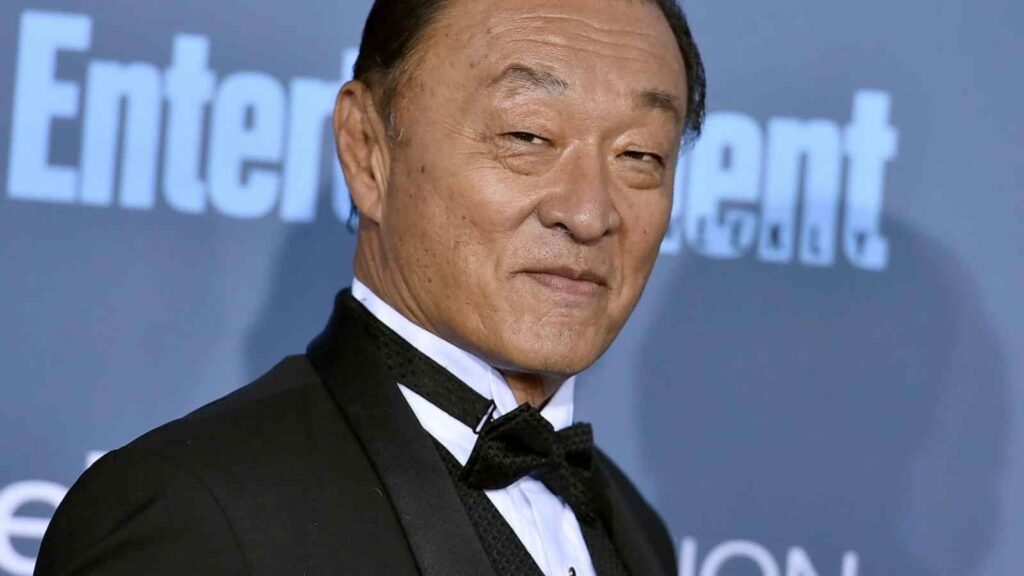
Tagawa was born in Tokyo, Japan, to Takarazuka actress Mariko Hata and a Japanese-American father. His father served in the United States Army, shaping Tagawa’s early military background. Growing up as an army brat, he moved across various cities near Fort Bragg, Fort Polk, and Fort Hood. These experiences strongly influenced his early life environment and expanded his cultural exposure. Raised in a bilingual upbringing, he spoke English and Japanese while also learning Russian, Korean, and Spanish.
His family later settled in Southern California, where his acting interest began during his education at Duarte High School. He continued his academic journey at the University of Southern California as an exchange student in Japan. There, he studied kendo and Shotokan karate under Masatoshi Nakayama at the Japan Karate Association. This training laid the foundation for lifelong martial arts discipline and personal development.
Breakthrough Roles and Iconic Performances
Cary-Hiroyuki Tagawa broke through as an actor with his striking performance as Eunuch Chang in The Last Emperor (1987). This role opened doors to major film opportunities and firmly established his presence in international cinema. He built on that success with a memorable appearance in the James Bond film Licence to Kill (1989). In the film, he portrayed an undercover agent connected to the Hong Kong Narcotics Board.
In Showdown in Little Tokyo (1991), Tagawa starred alongside Dolph Lundgren and Brandon Lee.
He delivered a commanding performance as yakuza boss Yoshida, showcasing intensity and authority on screen. That same year, he appeared with James Hong, Mako Iwamatsu, and Jeff Speakman in The Perfect Weapon. He portrayed Kai, an assistant to Korean mafia families, further demonstrating his versatility in action roles. His role as a troubled heir of a Japanese industrialist in Rising Sun (1993) showed a deeper dramatic range. However, Mortal Kombat (1995) cemented his legacy as the sorcerer Shang Tsung worldwide.
He later returned to the character in Mortal Kombat: Legacy (2013) and Mortal Kombat 11 (2019). Tagawa also stood out as pirate leader Kabai Sengh in The Phantom (1996).
Beyond acting, he contributed to the documentary The Slanted Screen (2006), directed by Jeff Adachi. There, he joined actors, producers, and directors to discuss the representation of Asian and Asian-American men in Hollywood. These discussions underscored the lasting cultural impact of many of his iconic performances.
Read More: The Fascinating Life of Mitchell Moranis Uncovered
Key Film and TV Roles
Cary-Hiroyuki Tagawa earned recognition for powerful film and television roles across multiple genres. He brought authority to Heihachi Mishima in Tekken and lent his voice to Brushogun in Teen Titans: Trouble in Tokyo (2006). His work also included Johnny Tsunami, Planet of the Apes, and a strong television turn as Satoshi Takeda in Revenge. Tagawa later stood out as Shogun Tokugawa Tsunayoshi in 47 Ronin and delivered a memorable lead performance as Nobusuke Tagomi in Amazon’s The Man in the High Castle. His lasting impact was honored in November 2015, when he received the Fists of Legends Legacy Award at the Urban Action Showcase & Expo.
Personal Life and Passing of Cary-Hiroyuki Tagawa
In his personal life, Cary-Hiroyuki Tagawa went through meaningful changes in his later years, including a religious conversion to Eastern Orthodoxy in 2015 and a nationality change when he obtained Russian citizenship in 2016. During the early morning hours at his home in Santa Barbara, California, Tagawa died at age 75 on 4 December 2025, with the medical cause reported as complications from a stroke, marking his quiet passing and final chapter.
Complete Filmography of Cary-Hiroyuki Tagawa
Film Production
| Year | Title | Role | Notes |
| 1986 | Big Trouble in Little China | Wing Kong Swordsman | Uncredited |
| 1986 | Armed Response | Toshi | |
| 1987 | The Last Emperor | Chang | |
| 1988 | Bulletproof | Thug (flashback) | Uncredited |
| 1988 | Spellbinder | Lieutenant Lee | |
| 1988 | Twins | Oriental Man | |
| 1989 | The Last Warrior | Imperial Marine | |
| 1989 | Licence to Kill | Kwang | |
| 1991 | Kickboxer 2 | Sanga | |
| 1991 | Showdown in Little Tokyo | Funekei Yoshida | |
| 1991 | The Perfect Weapon | Kai | |
| 1992 | Nemesis | Angie-Liv | |
| 1992 | American Me | El Japo | |
| 1993 | Rising Sun | Eddie Sakamura | |
| 1994 | Natural Causes | Major Somchal | |
| 1994 | Picture Bride | Kanzuki | |
| 1995 | The Dangerous | Kon | |
| 1995 | Mortal Kombat | Shang Tsung | |
| 1995 | Soldier Boyz | Vinh Moc | |
| 1996 | White Tiger | Victor Chow | |
| 1996 | The Phantom | The Great Kabai Sengh | |
| 1996 | Danger Zone | Monsieur Chang | |
| 1997 | Top of the World | Captain Hefter | |
| 1997 | Provocateur | Captain Jong | |
| 1997 | Mortal Kombat Annihilation | Shang Tsung | Archive footage |
| 1998 | Vampires | David Deyo | |
| 1998 | American Dragons | Matsuyama | |
| 1999 | Bridge of Dragons | General Ruechang | |
| 1999 | Fixations | Alex | |
| 1999 | Snow Falling on Cedars | Zenhichi Miyamoto | |
| 2000 | The Art of War | David Chan | |
| 2001 | Pearl Harbor | Commander Minoru Genda | |
| 2001 | Planet of the Apes | Krull | |
| 2005 | Elektra | Master Roshi | |
| 2005 | Memoirs of a Geisha | The Baron | |
| 2006 | The Slanted Screen | Himself | Documentary |
| 2007 | Balls of Fury | Mysterious Asian Man | |
| 2007 | Blizhniy Boy: The Ultimate Fighter | Alibek | |
| 2008 | Lost Warrior: Left Behind | Detective Yoshide | Direct-to-video |
| 2008 | Bodyguard: A New Beginning | Kai | |
| 2009 | By the Will of Chingis Khan | Bodyguard | |
| 2009 | Hachi: A Dog’s Tale | Ken | |
| 2009 | Tekken | Heihachi Mishima | |
| 2009 | The Tomb | Len Burris | |
| 2012 | Black Cobra | Goro Tanaka | Direct-to-video |
| 2013 | Duel of Legends | Shing | Also producer |
| 2013 | 47 Ronin | Tokugawa Tsunayoshi | |
| 2014 | Hype Nation 3D | Sammy Kata | |
| 2014 | Priest-San | Father Nikolai Takuro Nakamura | |
| 2014 | Ninja Apocalypse | Fumitaka | Direct-to-video |
| 2014 | Tekken 2: Kazuya’s Revenge | Heihachi Mishima | |
| 2014 | Skin Trade | Senator Khat | |
| 2015 | Junction | Narrator | Voice |
| 2015 | Diamond Cartel | Khazar | |
| 2015 | The Man with the Iron Fists 2 | The Mayor | Direct-to-video |
| 2015 | Little Boy | Hashimoto | |
| 2016 | Showdown in Manila | Aldric Cole | |
| 2016 | Beyond the Game | Detective Yoshida | |
| 2016 | Kubo and the Two Strings | Hashi | Voice |
| 2019 | Looking in the Mirror | Henry | |
| 2019 | Girl Games | Iwata | |
| 2020 | Sky Sharks | Michael Morel |
Short Film Roles
| Year | Title | Role | Notes |
| 2005 | True Love & Mimosa Tea | Andreas Kanaka | |
| 2005 | The Sand Island Drive-In Anthem | Uncle C | |
| 2009 | The Legend of Chang Apana | Chang Apana | Also producer |
| 2010 | Absolute. ness | Chief Dax | |
| 2010 | Overturned | Judge | |
| 2015 | Genghis Khan Conquers the Moon | Genghis Khan | |
| 2016 | Overwatch: Dragons | Narrator / Sojiro Shimada | Voice |
Television Appearances
| Year(s) | Title | Role | Notes |
| 1987 | MacGyver | Asian Buyer | Episode: “Dalton, Jack of Spies” |
| 1987 | The Colbys | Mr. Sung | Episode: “Devil’s Advocate” |
| 1987 | Star Trek: The Next Generation | Mandarin Bailiff | Episode: “Encounter at Farpoint” |
| 1987–1989 | Miami Vice | Kenji Fujitsu / Tegoro | 2 episodes |
| 1988 | Hotel | Inspector Chin | Episode: “Double Take” |
| 1989 | L.A. Takedown | Hugh Denny | Television film |
| 1989 | Superboy | Detective Jed Slade | Episode: “Terror from the Blue” |
| 1989 | Knots Landing | Mr. Toyo | Episode: “Giganticus II: The Revenge” |
| 1989 | Moonlighting | Artist | Episode: “Perfect” |
| 1989 | Peaceable Kingdom | Coach | Episode: “Chimp” |
| 1989 | Alien Nation | Yamato | Episode: “The First Cigar” |
| 1989 | Mission: Impossible | Vang Kai | Episode: “Countdown” |
| 1990 | Jake and the Fatman | Raymond Char | Episode: “Chinatown, My Chinatown” |
| 1990 | Hardball | — | Episode: “Wedding Bell Blues” |
| 1990 | The Bakery | Kim Lee | Television film |
| 1990 | Vestige of Honor | Thai Major | Television film |
| 1991 | Baywatch | Mason Sato | Episode: “War of Nerves” |
| 1991 | Not of This World | Shikido | Television film |
| 1991 | Mission of the Shark: The Saga of the U.S.S. Indianapolis | Shoji Hashimoto | Television film |
| 1992 | Raven | Osato | 2 episodes |
| 1993 | Renegade | Hirotaka | Episode: “Samurai” |
| 1993–1994 | Space Rangers | Zylyn | 6 episodes |
| 1994 | Day of Reckoning | Prakit | Television film |
| 1995 | Babylon 5 | Morishi | Episode: “Convictions” |
| 1995 | Thunder in Paradise 3 | Mason Lee | Television film |
| 1996 | Cybill | Kenji | Episode: “Cybill and Maryann Go to Japan” |
| 1996 | Sabrina the Teenage Witch | Tai Wei Tse | Episode: “Sweet & Sour Victory” |
| 1996–1997 | Nash Bridges | Lt. A.J. Shimamura | 15 episodes |
| 1997 | Happily Ever After: Fairy Tales for Every Child | King Young-Jin | Voice; Episode: “The Little Mermaid” |
| 1997 | Raven: Return of the Black Dragon | Osato | Television film |
| 1997 | Stargate SG-1 | Turghan | Episode: “Emancipation” |
| 1998 | Poltergeist: The Legacy | Sam Tanaka | Episode: “The Internment” |
| 1998 | Vengeance Unlimited | Aung Myint | Episode: “Ambition” |
| 1999 | Seven Days | Peter | Episode: “Walter” |
| 1999 | Johnny Tsunami | Johnny Tsunami | Television film |
| 1999 | NetForce | Leong Cheng | Television film |
| 2000 | Walker, Texas Ranger | Master Ko | Episode: “Black Dragons” |
| 2003 | Baywatch: Hawaiian Wedding | Mason Sato | Television film |
| 2004 | Hawaii | Captain Terry Harada | |
| 2005 | Faith of My Fathers | Cat | Television film |
| 2006 | Teen Titans: Trouble in Tokyo | Brushogun | Voice; Television film |
| 2007 | Heroes | The Swordsmith | 2 episodes |
| 2007 | Johnny Kapahala: Back on Board | Johnny Tsunami | Television film |
| 2008 | Ghost Voyage | The Steward | Television film |
| 2009 | Beyond the Break | Xander | 2 episodes |
| 2010 | Hawaii Five-0 | Hiro Noshimori | 2 episodes |
| 2012–2013 | Revenge | Satoshi Takeda | 6 episodes |
| 2014 | Teen Wolf | Katashi / Silverfinger | Episode: “Silverfinger” |
| 2014 | The Librarians | Mr. Drake | Episode: “And the Apple of Discord” |
| 2015–2018 | The Man in the High Castle | Nobusuke Tagomi | Main cast |
| 2016 | Grimm | Takeshi Himura | Episode: “Inugami” |
| 2016 | Teenage Mutant Ninja Turtles | Sumo Kuma | Voice; 2 episodes |
| 2017 | Star Wars Rebels | Alrich Wren | Voice; 2 episodes |
| 2018 | Lost in Space | Hiroki Watanabe | 5 episodes |
| 2019 | A Lover Scorned | Wong | Television film |
| 2020 | DuckTales | Akita | Voice; Episode: “Astro B.O.Y.D.!” |
| 2021 | Star Wars: Visions | Valco | Voice: “The Village Bride” (English dub) |
| 2021 | NCIS: Los Angeles | Craig Tanaka | Episode: “Fukushu” |
| 2023 | Blue Eye Samurai | Master Eiji | Voice |
Cary-Hiroyuki Tagawa And His Marriage To Sally Phillips
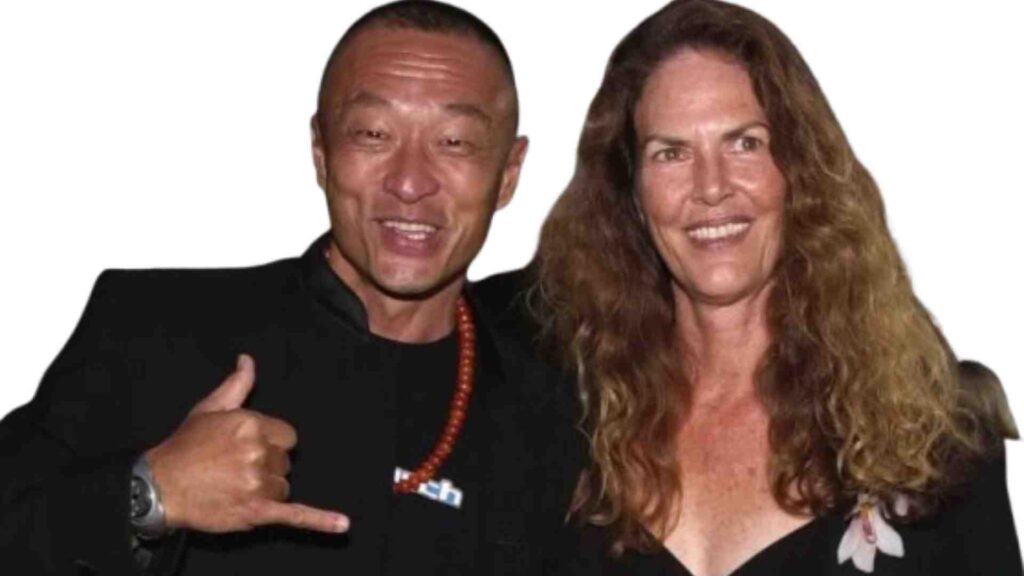
Cary-Hiroyuki Tagawa shared a calm and meaningful relationship grounded in strong family values and genuine mutual respect. According to reports, he met Sally Phillips in 1984 in San Diego through common friends, beginning as friends. Over time, that friendship gradually developed into a lasting relationship that eventually led to marriage. The couple spent nearly three decades living together, mainly in Hawaii, choosing privacy over constant public attention. They maintained a strong sense of personal space while building a peaceful life away from media scrutiny.
Sally, an artist, brought deep artistic influence into the family and shaped a creatively supportive home environment. Meanwhile, Tagawa’s creative career and music collaborations helped maintain balance and shared creative expression within the household. Together, they raised three children, including one son, Calen Tagawa, and two daughters, Brynne and Cana Tagawa.
Calen followed a creative path in music and production and even collaborated professionally alongside his father. Brynne showed a strong interest in art, closely reflecting her mother’s artistic passion and creative influence. Cana preferred staying out of the spotlight and consistently maintained a quiet and private personal life. Overall, their marriage reflects a grounded, low-profile partnership shaped by shared values, close family bonds, and intentional living.
Online
| Year | Title | Role | Notes |
| 2013 | Mortal Kombat: Legacy | Shang Tsung | 2 episodes |
Video Game Roles
| Year(s) | Title | Role | Notes |
| 1997 | Soldier Boyz | Vinh Moc | |
| 2003 | Batman: Rise of Sin Tzu | Sin Tzu | |
| 2016 | World of Warcraft: Legion | — | Voice-over cast |
| 2019–2020 | Mortal Kombat 11 | Shang Tsung | Voice and physical likeness; downloadable content |
| 2023 | Mortal Kombat: Onslaught | — | Physical likeness |
Cary-Hiroyuki Tagawa and Sally Phillips’ Divorce
In 2014, Cary-Hiroyuki Tagawa and Sally chose to end their marriage quietly after facing personal issues, going their separate ways with minimal public attention. Very little information about the divorce is available online, reflecting how strongly they valued privacy during and after the separation. Following the split, Cary stayed focused on acting and continued building his career, while Sally remained active as an artist, working steadily and teaching art. Their children also moved forward with their own careers, staying busy and independent, which reflects a calm and stable life after the divorce, built on professionalism and personal growth.
Frequently Asked Questions (FAQ;s)
Who is Cary-Hiroyuki Tagawa?
Cary-Hiroyuki Tagawa is a Japanese-American actor best known for playing the villain Shang Tsung in the Mortal Kombat franchise.
Why is Cary-Hiroyuki Tagawa famous?
He gained global recognition for portraying powerful antagonists, especially Shang Tsung, and for his commanding on-screen presence.
Why did Cary-Hiroyuki Tagawa leave Nash Bridges?
He left Nash Bridges after his character, Lt. A.J. Shimamura, was written out following a promotion storyline in the series.
Is Cary-Hiroyuki Tagawa a real martial artist?
Yes, Cary-Hiroyuki Tagawa has formal martial arts training and began studying kendo during his early years.
Was Cary-Hiroyuki Tagawa in Tekken?
Yes, he played Heihachi Mishima in the live-action Tekken film based on the popular video game franchise.
What are Cary-Hiroyuki Tagawa’s most famous roles?
His most iconic roles include Shang Tsung in Mortal Kombat and Kabal Singh in The Phantom.
Did Cary-Hiroyuki Tagawa do voice acting?
Yes, he has lent his voice to several projects, including Teen Titans: Trouble in Tokyo.
Has Cary-Hiroyuki Tagawa retired from acting?
No, Cary-Hiroyuki Tagawa has continued acting over the years, appearing in films, television, and voice roles.
Did Cary-Hiroyuki Tagawa pass away?
No. As of the most recent and reliable information, Cary-Hiroyuki Tagawa is alive. Reports claiming otherwise are inaccurate.
Where is Cary-Hiroyuki Tagawa from?
He was born in Tokyo, Japan, and later moved to the United States, where he built his acting career.
What type of roles does Cary-Hiroyuki Tagawa usually play?
He is widely known for portraying villains, warriors, and authority figures with a strong screen presence.
Is Cary-Hiroyuki Tagawa still associated with Mortal Kombat?
Yes, he has reprised Shang Tsung in multiple Mortal Kombat projects, including games and films.
Conclusion
Cary-Hiroyuki Tagawa’s journey stands out for its balance of talent, discipline, and quiet grace. His powerful performances, especially in iconic villain roles, helped shape a career that spans film, television, and voice acting. At the same time, his personal life shows a consistent choice for privacy, professionalism, and respect, even during major life changes. Together, his work and life reflect a thoughtful artist who earned admiration not through noise or controversy, but through dedication, consistency, and lasting impact on audiences around the world.
Read More: Jamie Campbell Bower: Secrets Behind His Rise to Fame Revealed!
SEO specialist with 5+ years of experience in On-Page, Technical, and Off-Page SEO. I help websites and e-commerce stores rank higher on Google and drive consistent organic traffic through strategic SEO and keyword optimization.